
Should I have dental treatment in Turkey? Answer these first
Before you send a single enquiry, five questions to answer honestly, while you are still the one asking rather than the one responding.
Reviewed by Yiğit Bal, dentistWritten in Turkey by a dentist. Klinikle is a clinic directory, not a clinic — no practice pays to appear here, and we do not provide treatment. Where a page compares Turkey with treatment at home, read it knowing where it was written.
Last updated:
Whether you should have dental treatment in Turkey is not a question anyone can answer for you from the outside, and the five below are the ones that decide it. Answer them before you send a single message, because the moment you do, the conversation stops being yours. From then on you are responding to plans somebody else has drafted, on a timetable somebody else set, and the honest answers get harder to give without feeling awkward.
None of this takes more than an evening. All of it is easier now than it will be in three weeks, when you have a quote in front of you and someone is asking about dates.
The first enquiry changes who is in charge
Send a photograph of your teeth to five clinics — without briefing any of them properly — and within a day you will hold five plans, all confident, several contradicting each other, and none written by anyone who has examined you. From there the natural instinct is to compare them, which is a comparison of sales documents, not of diagnoses.
The way out is to have already decided what you want, what you will accept, and what would make you walk away. Written down, before the first reply arrives. That is a different exercise from working out whether the trip is a sensible idea at all, which is covered separately.
The five questions
1. Do you have a diagnosis, or a complaint?
Can you name the teeth and the problem? Not “my teeth are a mess”: which tooth, and what is wrong with it. If you cannot, you do not have a diagnosis, you have a complaint, and everything built on top of it will be somebody else’s interpretation.
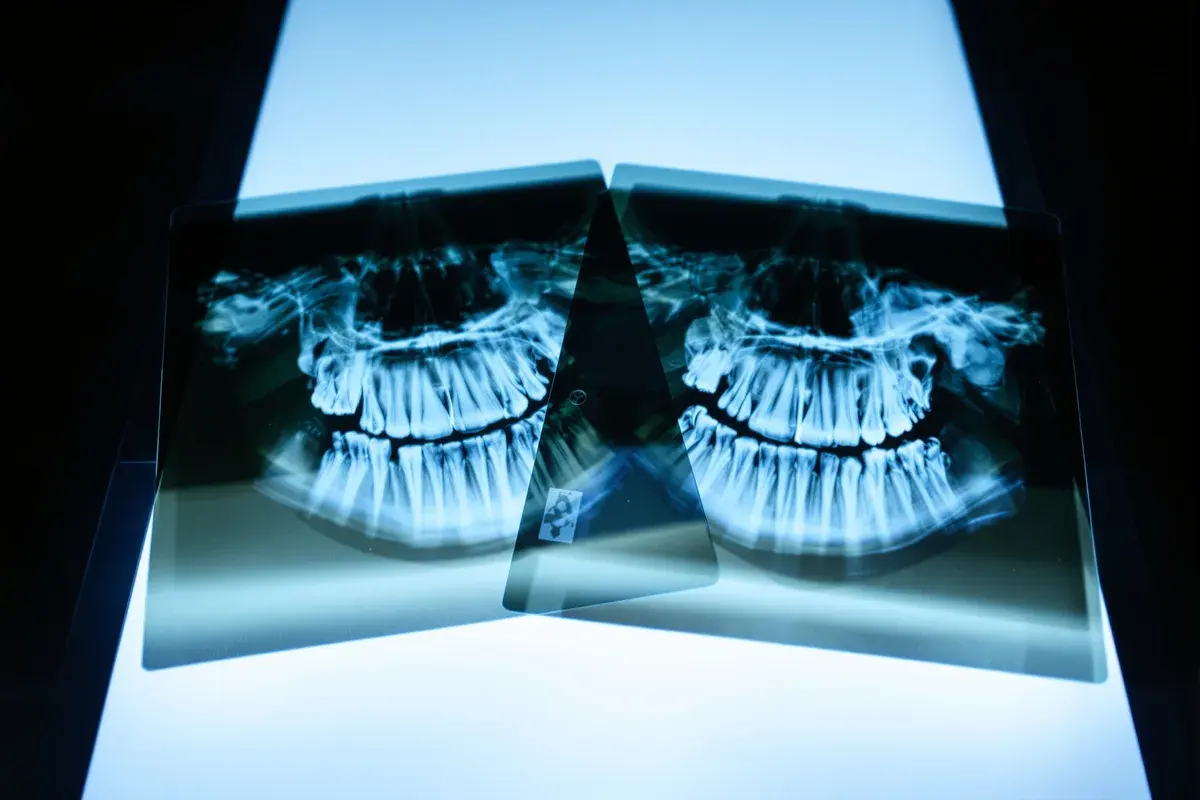
The fix is an examination and a full set of radiographs at home before you contact anyone. It gives you a baseline, it tells you whether you are dealing with three teeth or thirteen, and it means the plans you receive can be measured against something. A complete set looks like the one described in the scans a clinic needs before planning anything.
2. What would you count as a success?
Write one sentence. Ending pain, chewing properly, or liking how your front teeth look are three different objectives, and they lead to genuinely different treatment. Most people want some blend, but there is nearly always a dominant one, and being vague about which invites a plan that answers a question you were not asking.
If the honest answer is appearance, say so plainly instead of dressing it up as function. It changes what is reasonable and what is achievable, and it is the honest starting point for realistic expectations about how teeth will look.
3. What are you prepared to keep doing for the next ten years?
Every restoration comes with a maintenance obligation, and the more ambitious the work the larger the obligation. Small brushes in awkward gaps, twice a day. A guard worn every night. Professional cleaning at intervals, indefinitely. Parts that need checking and occasionally replacing.
Answer this one honestly, including about your hands and your eyesight in ten years’ time. It rules some designs in and others out, and it is far better as an input to the plan than as a discovery afterwards.
4. What in your life cannot move?
Time off work, and how much of it the treatment needs. Who looks after children or a parent while you are away. Health that is not currently stable. A wedding in March.
Fixed dates deserve particular suspicion. If the date is close and immovable, that is usually an argument for postponing the treatment rather than accelerating it, because a schedule with no slack has nowhere to put a remake. There are situations where waiting is simply the better answer, and they are gathered in when travelling for dental work is the wrong decision.
5. Who will look after this once you are home, and have you asked them?
Not “I’ll find someone”. A named practice that has said yes. Ring two or three, explain what you are considering, and ask whether they would review the work and deal with a problem in it.
Ring with a script, not a summary, because the summary version invites a shrug. Something close to this, word for word:
“I’m considering having [X teeth] treated abroad in the next few months. Before I book anything I want to know two things: would you take me on for routine check-ups afterwards, and if a crown or implant placed there failed, would you look at it or would I have to go back? I’m not asking you to guarantee the work.”
Three answers come back, and each one tells you something different.
- “Yes, register with us, and we’d assess anything that went wrong and tell you what putting it right would involve.” The answer you want. Note what it is not: nobody is taking on someone else’s work as their own responsibility. Ask to be registered now, not later, so you are an existing patient by the time you fly.
- “We’ll see you for check-ups and hygiene, but we won’t touch the crowns or implants themselves.” Common, and honest. It means routine care is covered and anything involving the restorations is not. The follow-up question is who they would refer you to for an implant problem. Whether a name exists near you matters more than the refusal does.
- “We don’t take on patients who’ve had treatment abroad”, or a vague “ring us if something happens”. There is no aftercare route here. Ring the next practice on your list, because the answer varies a great deal between them, and if every local answer is this one, count a return trip and the time off it needs as part of the decision rather than as bad luck later.
Do it before you book. A dentist is far more likely to agree to look after something that does not exist yet than to inherit it at the point where it is hurting. Exactly what to ask on that call is in follow-up appointments back home.
What your honest answer points towards
| If your honest answer to question two is | The plan usually needs to be shaped around | Be wary of |
|---|---|---|
| “I am in pain and I want it to stop” | Diagnosing and treating the specific tooth, in the right order | A whole-mouth plan built outwards from one painful tooth |
| “I do not like my front teeth” | Assessing the least destructive option that achieves it, first | Sound teeth being prepared for crowns because it is quicker |
| “I cannot chew properly” | Which teeth are missing, what opposes them, and restoring back-tooth contact | Work concentrated on the teeth that show |
| “My denture moves and I hate it” | The range from a couple of implants retaining it upwards | Going straight to a full fixed arch without the alternatives being explained |
| “Everything is failing and I want it over with” | A written, staged sequence with decision points between stages | A single-week clearance and fixed teeth, decided from photographs |
| “I want it done before a specific date” | Whether the date is realistic at all, before anything else | Any schedule with no spare days in it |
The right-hand column is not a list of bad clinics. It is a list of mismatches: good work aimed at the wrong objective, which is what happens when the objective was never stated.
What skipping this looks like six months on
The patterns are consistent and they trace back to the same omission.
Someone who wanted their front teeth to look better ends up with a great deal of dentistry on teeth that nobody could see. Someone who wanted the pain gone gets a beautiful result and still has the pain, because the tooth that hurt was never the tooth being treated. Someone who cannot manage the daily cleaning has work they cannot maintain. Someone who was never going to take a fortnight off compresses a two-stage plan into one trip. And someone who did not ask anyone at home is now ringing practices as a stranger with a problem.
Every one of those is a question-two or question-three failure, decided before any clinic was contacted.
Write the answers down before you open another tab
Five sentences on one page: the diagnosis you have or lack, what success means, what you will maintain, what cannot move, and who has agreed to see you. Then add a sixth line (what would make you walk away) and decide it now, while you are calm and nobody is waiting on your reply.
Keep that page open when the plans arrive. A reply worth taking seriously will engage with your five sentences; a plan that does not address them is not a plan for you, however well presented it is, and that judgement is much easier to make when the sentences were written first. With those in hand, the outward questions in twelve questions to ask a clinic before you book become genuinely useful instead of a script.
This page is general information, not medical advice. Outcomes vary between individuals and suitability can only be established after an in-person examination and imaging by a qualified dentist.
Related reading
Get an honest assessment first
Tell us what you're dealing with and we'll come back on WhatsApp with a straight answer — including whether travelling is worth it for your case at all. No photos needed to start.