
Why implants fail, and what raises the risk
Implants fail in two unrelated ways: early, when bone never bonds to the fixture, and years later, when infection or overload sets in. What raises each risk.
Reviewed by Yiğit Bal, dentistWritten in Turkey by a dentist. Klinikle is a clinic directory, not a clinic — no practice pays to appear here, and we do not provide treatment. Where a page compares Turkey with treatment at home, read it knowing where it was written.
Last updated:
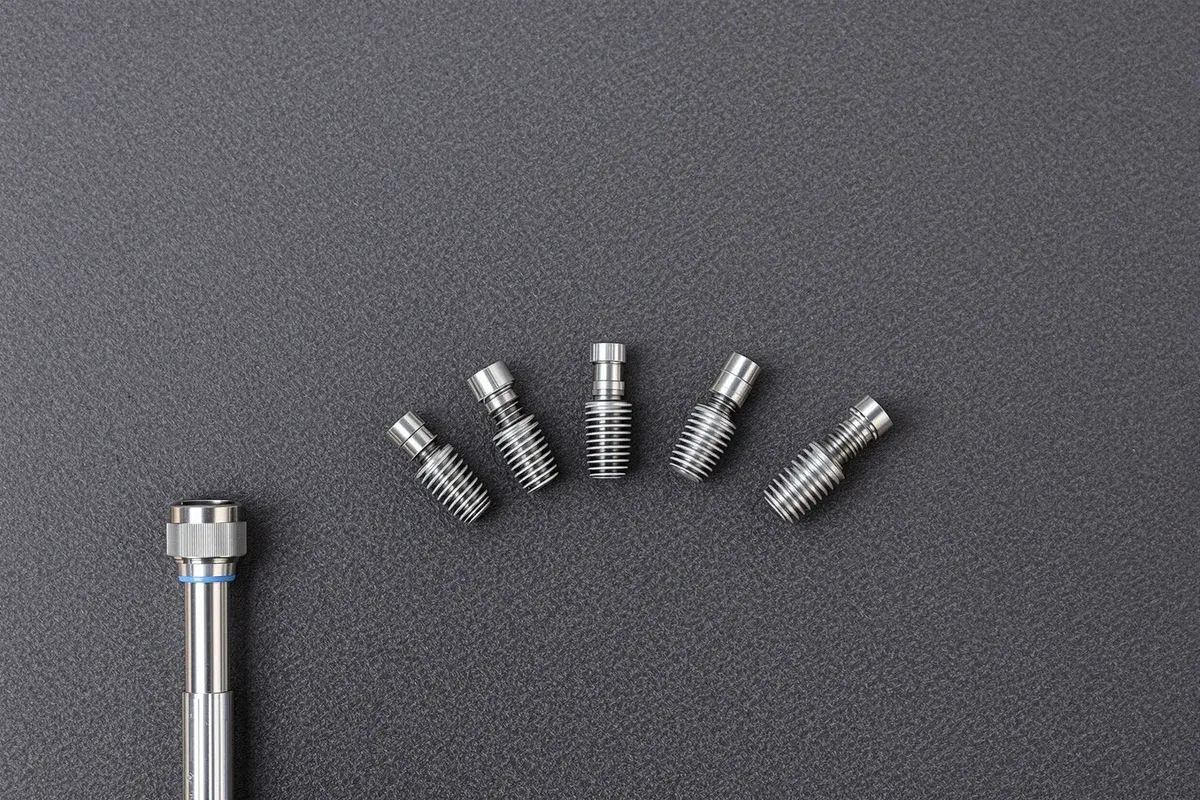
Implants fail in two quite separate ways, and treating them as one subject is why the topic feels so murky. A small number never bond to the bone at all, which shows up within weeks or a few months. A larger group bond perfectly well, work for years, and are then lost to infection around the neck of the implant or to forces the design could not carry.
The causes barely overlap, and neither has much to do with the brand of titanium.
Two failures with almost nothing in common
| Early failure | Late failure | |
|---|---|---|
| When | Usually within the first three to six months, before or shortly after loading | Typically years later |
| What you notice | Persistent ache, the implant feels loose, a bad taste, the site never settles | Bleeding when you brush, gum shrinking back, a smell, sometimes nothing at all |
| Usual cause | The bone never integrated: overheating during placement, too little initial stability, contamination, loading too soon, heavy smoking during healing | Peri-implantitis, or bite forces exceeding what the implant can take |
| What can be done | The fixture is removed, the site heals, and replacement is considered months later | Depends how much bone is left; caught early it can often be managed, caught late it usually cannot |
The published figures, and the spread inside them
Three numbers get quoted at people considering implants, almost always without the range around them. The range is the part worth reading.
| Reported range | Where the range comes from | |
|---|---|---|
| Implants still in place at ten years | 91.5% at the low end, 99.4% at the high end, around a pooled estimate of 96.4% | Howe, Keys and Richards’ 2019 systematic review and sensitivity meta-analysis of ten-year implant survival; the outer figures are its prediction interval, which is the spread you would expect a new study to land in |
| Peri-implantitis, counted per patient | 1% at the low end, 47% at the high end, with a weighted mean of 22% | Derks and Tomasi’s 2015 systematic review of peri-implant epidemiology, the body of evidence the 2017 World Workshop consensus worked from |
| Early failure, before the fixture is ever loaded | No pooled range worth quoting, because studies stop counting at different moments — some at abutment connection, some at six months — so their figures are not measuring the same event | Ask the clinic for its own early-failure rate in writing, over what period, and counted from what point; a rate without its definition attached tells you nothing |
Survival and health are not the same bar, which is why the first row looks reassuring and the second does not: an implant counts as surviving for as long as it is still in the jaw, including the ones being treated for the disease in the row beneath it. And the peri-implantitis range is that wide because studies do not put the bone-loss threshold in the same place; the 2017 consensus had to specify that thresholds exceed measurement error for exactly this reason. The same mouth can be counted as diseased in one study and sound in another without a single thing about it having changed.
When the bond never forms
Osseointegration is a biological process with conditions attached, and the first weeks decide it.
Heat during placement
Bone cells die at surprisingly low temperatures. Drilling too fast, with worn burs or without irrigation, can cook a thin layer of bone that then never bonds. You cannot audit this from the outside, which is part of why who actually performs the surgery matters.
Not enough grip on day one
An implant needs to sit tight in the bone from the moment it goes in. In soft bone at the back of the upper jaw, or in a socket where a tooth has just come out, that grip can be marginal. A careful surgeon responds by waiting rather than by loading a temporary tooth onto it.
Contamination and existing infection
Placing an implant into a site with active infection, or into a mouth with untreated gum disease, stacks the odds against integration from the start.
Loading it too early
A fixture carrying chewing forces before the bone has done its work can be shifted micrometre by micrometre until fibrous tissue forms instead of bone. This is the risk hidden inside the tightest one-week schedules, and the person who finds out is usually already home.
The slow one: infection around a screw that integrated fine
Peri-implantitis is gum disease around an implant. It starts as inflammation in the soft tissue and progresses to bone loss around the fixture. The thing that makes it dangerous is what an implant lacks: there is no nerve inside it, so there is no toothache to warn you. People commonly notice bleeding on brushing, a gum that has crept backwards, or an odd smell, and assume it is nothing.
By the time an implant feels loose, the bone that held it has largely gone. Mobility is not an early sign of trouble; it is the end of the story.
Anyone with a history of periodontitis carries that risk forward. If your gums were unstable before, they need treating and stabilising before implants go in, not afterwards. Gum treatment belongs earlier in a plan than most quotes place it.
Mechanical problems that feel like failure but aren’t
Three things get reported as “my implant failed” when the implant itself is fine:
- A loose abutment screw. The crown wobbles, the fixture doesn’t. Usually retightened, sometimes replaced.
- A chipped or fractured crown. A laboratory job, not surgery.
- Cement washing out at the margin of a cemented crown, letting bacteria in underneath.
All three are repairs, provided somebody has the component details. Without them a straightforward fix becomes a remake, which is the practical argument for collecting what your records should include before you leave the clinic.
Risks that stack
Rarely is there one cause. The list below is not a ranking, and nothing on it is a verdict by itself:
- Untreated or unstable gum disease.
- Smoking, which affects both the healing phase and the long-term gum response. Smoking and implants covers the windows that matter most.
- Blood glucose that runs high and unpredictable; see diabetes and dental treatment.
- Grinding or clenching, unprotected.
- A restoration you cannot physically clean under.
- Too few implants carrying too long a bridge.
- No reviews, ever, so nothing is caught while it is still small.
Any one of these on its own is manageable. Three or four together is a different conversation, and an honest dentist will have it with you before placement, not after.
Symptoms worth acting on quickly
Bleeding that keeps coming back around one implant. Gum that looks puffy or has receded on that side. A taste or smell you cannot brush away. Any movement at all. Pain that starts months after everything had settled.
None of these are emergencies in the ambulance sense, but all of them are the kind of thing that gets smaller and simpler to sort the sooner someone looks. If the treating clinic is abroad, what happens if it goes wrong sets out the order to do things in, and aftercare when you get home covers the arrangements worth making before you need them.
This page is general information, not medical advice. Outcomes vary between individuals and suitability can only be established after an in-person examination and imaging by a qualified dentist.
Related reading
Get an honest assessment first
Tell us what you're dealing with and we'll come back on WhatsApp with a straight answer — including whether travelling is worth it for your case at all. No photos needed to start.