
Bone graft granules coming out, and when to call the clinic
A grain or two in the first days, fewer each day, is normal. Ring the clinic if they keep coming after a week, the stitches open or grit reaches your nose.
Reviewed by Yiğit Bal, dentistWritten in Turkey by a dentist. Klinikle is a clinic directory, not a clinic — no practice pays to appear here, and we do not provide treatment. Where a page compares Turkey with treatment at home, read it knowing where it was written.
Last updated:
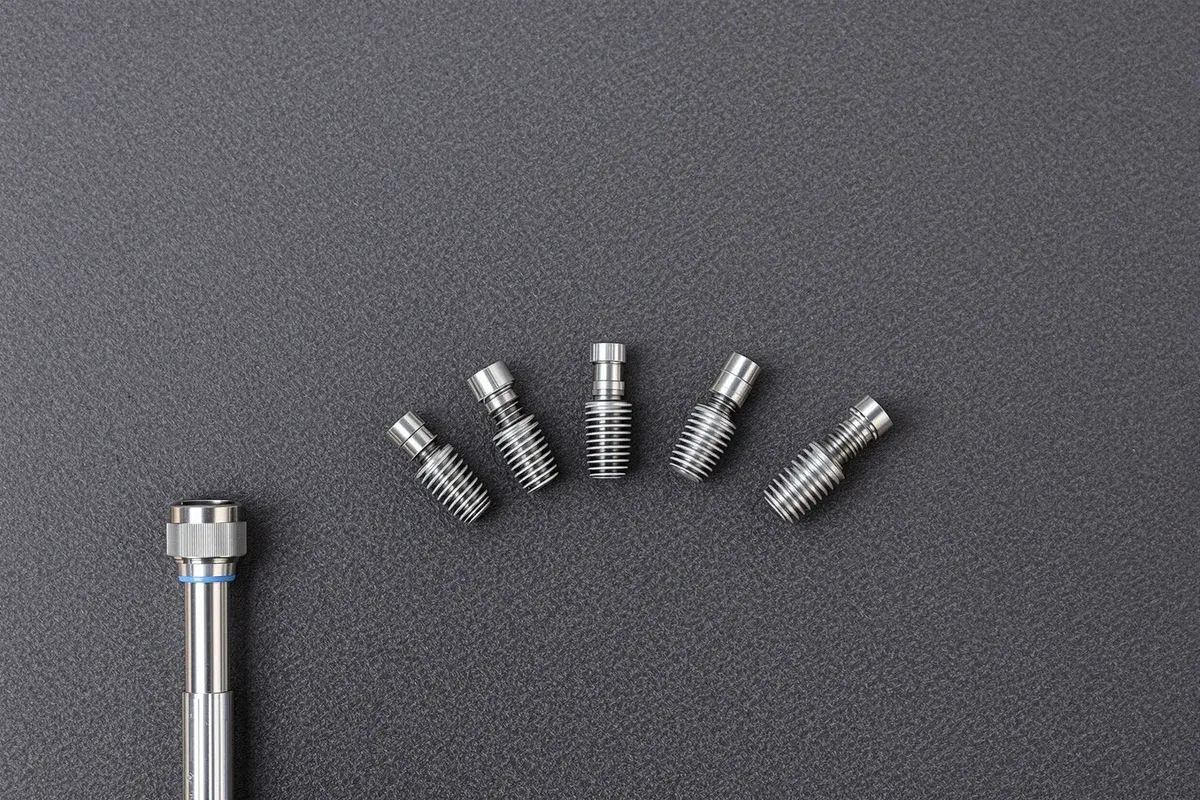
It is common for a few bone graft granules to come out in the first days after surgery: small, hard, sand-like particles that turn up on your tongue. On their own they rarely affect the result. Most graft material is supplied as granules, and when the surgeon packs a site there is usually a little excess sitting near the surface. Until the gum seals over, some of that works its way out between the stitches.
So the useful question is how long it goes on, how much comes out, and what else is happening at the same time.
A few grains, and when it stops being a few
The ordinary pattern is easy to recognise. You find a grain or two now and again, mostly in the first three or four days, fewer each day, and then none. Over the same stretch the soreness and swelling ease a little every morning. The stitches are where they were put, and there is no smell.
The pattern that needs a dentist runs the other way. Grains are still arriving after the first week, or the amount is increasing, or you can see a gap opening along the stitch line with greyish-white grit sitting in it. A graft placed into an extraction socket at the same visit tends to shed a little more than one placed under a closed flap, and that is expected; socket preservation explains why the socket is packed the way it is. Even there, the direction of travel should be towards less.
Swallowing a few grains does no harm. Note roughly how many and on which day they started, because that detail is worth more at the review than any description of how it felt.
A membrane you can see
Many grafts are covered with a membrane that holds the granules in place while bone forms. Some are collagen and disappear on their own; others are a non-resorbable sheet, occasionally reinforced with a fine titanium mesh. If the gum pulls back from the wound edge, you may see a flat white, grey or yellowish layer, or a thin metallic grid, where there should be pink tissue.
It often does not hurt, which is exactly why people leave it. Let the clinic know within a few days. An exposure spotted early can usually be managed where it is, by keeping it very clean and sometimes by trimming or removing the membrane at the right moment, while one discovered at the implant appointment months later has often cost part of the graft. Do not pull at it, trim it or press it back down yourself.
After a sinus lift, watch the nose as well
When bone is added to the upper back jaw by lifting the floor of the sinus, the graft sits directly beneath the lining of that sinus. Grains then have a second way out, and it is not your mouth. Graft particles in your handkerchief, a one-sided discharge that is thick, dark or smells bad, or a drink coming back through the nostril all suggest the lining has been breached and some material has escaped upwards. Ring the treating clinic the same day, and see someone locally if you are already home. Until you have spoken to a dentist, do not blow your nose, and sneeze with your mouth open so the pressure has somewhere to go. The operation and its normal recovery are in sinus lift in Turkey; how a torn lining is handled, on the day and afterwards, is in sinus perforation.
Leaving the site alone
The instinct is to tidy it. Resist it: loose grains are usually lying on top of grains that are still in place, and disturbing one disturbs the others.
- Keep your tongue and fingers off the area, however gritty it feels.
- Do not pull your lip out to look. The stitch line is under tension already, and every inspection stretches it.
- Chew on the other side, and clean the site only in the way the clinic described. Cleaning around stitches has the gentle version for the first fortnight.
- Smoking slows gum healing and makes wound breakdown more likely; if there was ever a week to stop, this is it.
A photograph and a message the clinic can act on
If you are back in the UK and the clinic is in Turkey, a clear message the same day saves a round of questions. Photographs in daylight, with the lip held back gently by someone else, are more useful than any number of words.
- One picture of the whole area, one close up of the stitch line.
- The date of surgery and what was done, as written on your notes: socket graft, ridge graft or sinus lift, and whether a membrane or mesh was used.
- When the grains started, and whether they are increasing, steady or tailing off.
- Anything else: smell, taste, discharge from the nose, swelling, temperature.
- What you would like from them: a call, a written plan, or a referral note for a dentist near you.
Ask for a reply with a timescale. If you have not heard by the next working day and things are getting worse, do not wait for them; a dentist here can examine the site, and infection after you fly home explains how to arrange that.
Signs that cannot wait for a reply
Some things are not a matter for the clinic's inbox at all. Go to A&E (an emergency department in Ireland, a hospital acil servis if you are still in Turkey) for swelling that spreads towards the eye or down the neck or grows by the hour; a high temperature or difficulty swallowing alongside the swelling, or the floor of the mouth rising; bleeding that 15–20 minutes of firm pressure has not stopped, including a nosebleed that keeps going; or a severe headache with a stiff neck. If breathing becomes difficult, or someone becomes drowsy or confused, call 999 (112 or 999 in Ireland, 112 in Turkey) and do not make your own way there. For anything short of that out of hours, NHS 111 can tell you where to be seen.
What the review looks for
At the next examination the dentist looks at the wound edges and the membrane first, then compares a new radiograph with the one taken after surgery to see whether the graft has kept its volume. A small loss from the surface usually changes nothing. An opened wound is cleaned and helped to close; an infected graft may have to be partly removed. The real consequence of lost graft is felt later, at the implant stage, when the width or height available decides whether the implant goes in as planned or the site needs more work first. Bone grafting and sinus lifts sets out how that timetable is built, and why it can move.
This page is general information, not medical advice. Outcomes vary between individuals and suitability can only be established after an in-person examination and imaging by a qualified dentist.
Related reading
Get an honest assessment first
Tell us what you're dealing with and we'll come back on WhatsApp with a straight answer — including whether travelling is worth it for your case at all. No photos needed to start.