
When a new crown feels high
A crown that lands before your other teeth is a two-minute fix in the chair and a much bigger problem six weeks later. How to tell, and what to ask for.
Reviewed by Yiğit Bal, dentistWritten in Turkey by a dentist. Klinikle is a clinic directory, not a clinic — no practice pays to appear here, and we do not provide treatment. Where a page compares Turkey with treatment at home, read it knowing where it was written.
Last updated:
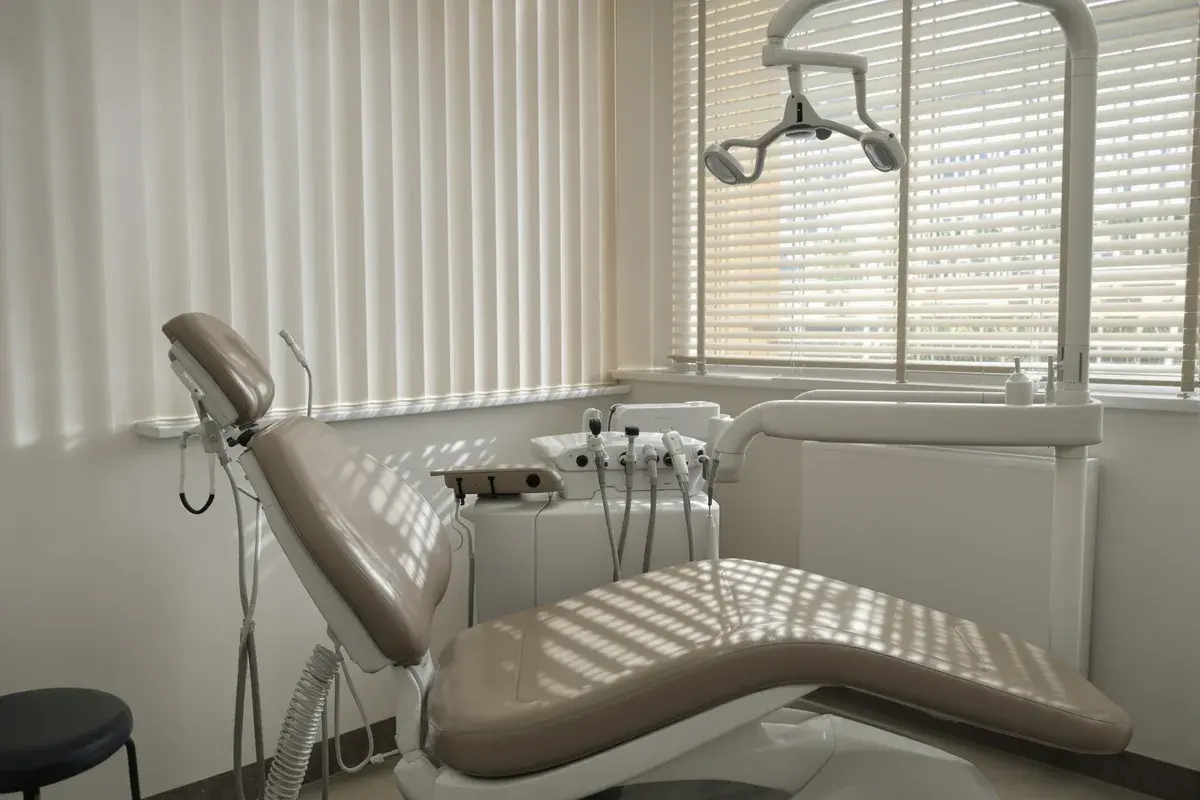
If a new crown feels like it hits before the rest of your teeth, say so immediately, because that is the one complaint that gets harder to solve the longer you leave it. Adjusting a high crown takes a couple of minutes with a bur and a strip of marking paper. Leaving a high crown alone for a month can end in root canal treatment through the top of it.
The awkward part is that the person best placed to detect it is you, and you’re the one person in the room who can’t feel anything at the moment it is fitted.
What “high” means in fractions of a millimetre
Your teeth are not fixed rigidly in bone. Each sits in a socket suspended by the periodontal ligament, a thin layer of fibres that lets the tooth move a fraction under load and that is densely supplied with nerve endings sensing pressure. It is a remarkably fine instrument. Most people can detect a foreign object between their back teeth that is thinner than a sheet of paper.
That sensitivity is why a crown built a few hundredths of a millimetre too tall does not feel like a minor imperfection. It feels wrong every time you close, and the tooth carrying that first contact is absorbing a chewing load that should have been shared across the whole arch.
For a day or two the ligament compresses and the tooth shifts slightly, and the feeling often eases. That is the trap. The sensation settling does not mean the contact has corrected itself; it means the tooth has been pushed. What follows is tenderness, then inflammation inside the tooth, and eventually a nerve that does not recover.
Why nobody can judge it while you are numb
Local anaesthetic does not only remove pain. It removes the pressure sense in the ligament that tells you where your teeth are meeting, so your bite feels vague and unreliable, and you’ll agree that it feels fine because you genuinely cannot tell.
Several other things conspire on fitting day. Your jaw muscles have been held open and are tired, so you close differently from how you close over dinner. If a temporary crown has been on the tooth for a week — or came off at some point during it — the tooth and its neighbours may have drifted a fraction. Gum around a freshly prepared tooth is often slightly swollen. And marking paper checks the position you are asked to close into, which is not always the position you chew in.
None of that is negligence. It is the reason a bite check belongs at a separate appointment, when you can feel your own mouth again. When your bite feels wrong afterwards takes the same point wider.
The first fortnight, day by day
Fitting day. Numb, the bite vague, the tooth bulky and unfamiliar. All of that is expected. What is not expected is being able to tell, once sensation comes back that evening, that the crown hits first.
Days one and two. Mild awareness of the new tooth, and brief sensitivity to cold. Say something if what you have instead is pain on biting down, or a dull throb when you are not eating at all.
Days three to five. The awareness should be fading, and you should be forgetting the tooth between meals. Tenderness that increases instead of easing, or catching yourself chewing on the other side, is the signal to go back.
Days five to ten. Occasional cold sensitivity that passes in seconds is ordinary. Cold pain that lingers for a minute or more after the ice water has gone is not.
Week two. By now the crown should feel like a tooth you no longer think about. If it is still landing first, or a new ache has appeared in the jaw muscles or the temple, that is the crown talking.
Weeks three to six. Nothing at all. A tooth that is tender to tap on, pain that wakes you at night, or a chip in the ceramic all belong in a chair.
The second half of each of those is not a scale of severity. Any of it, at any point, is a reason to be seen, and if you are still in the country, that reason outranks a spa afternoon.
The check to insist on before you leave the chair
Ask what else the marking paper touches
This is the single most useful sentence you can say to a dentist: “When you check the paper, are my other teeth marking as well, or only the crown?” If the crown is the only tooth leaving a mark, it is high, whatever it feels like. Teeth are supposed to share the contact.
Ask for the check to be done twice: tapping straight up and down, and then sliding your jaw side to side and forwards. A crown can be perfect in the closed position and still catch when you move, which is how a ceramic edge gets chipped weeks later, or how a crown works loose from its cement.
Ask for a second look the following morning
Come back once the anaesthetic has fully gone and after you have eaten a real meal. Chewing a sandwich tells you more than twenty minutes of tapping in a chair. Build that appointment into your dates instead of hoping for a gap; how long you actually need to stay is worth reading before you book flights around a fitting day.
If the crown is on an implant
An implant has no periodontal ligament, so it has none of the pressure sensing that lets you feel a high spot on a natural tooth. You may notice nothing at all while the implant takes contact your natural teeth should be sharing. That is why implant crowns are usually set to touch a shade more lightly than the teeth around them. It is also why the bite check on implant work is a clinical job rather than something to be settled by asking whether it feels all right, and why it is worth rechecking over the first six months with implants, while the natural teeth around them are still settling.
Already home and it still lands first
- Write to the treating clinic the same week, naming the tooth and describing when it hurts: on biting, on cold, or unprompted. Keep the thread; it is what any later conversation about the work will be built on.
- Book an appointment locally for an adjustment. It is routine work and does not require the original dentist.
- Ask the dentist doing it whether they are reshaping the crown or your natural teeth. Adjusting the new ceramic is straightforward. Grinding sound opposing teeth to accommodate a tall crown is a decision that deserves a conversation first.
- Expect more than one visit if a full arch is involved, since bites settle in stages.
- Never attempt it with a file or an abrasive kit. You can’t see where the contact is, and enamel does not grow back.
If the tooth stays tender for weeks after being adjusted, or the pain has turned into something that keeps you awake, it has stopped being a bite problem and needs an examination and a radiograph. How much discomfort is normal afterwards sets out where that line sits, and lining up a dentist before you need one is the point of follow-up appointments back home.
This page is general information, not medical advice. Outcomes vary between individuals and suitability can only be established after an in-person examination and imaging by a qualified dentist.
Related reading
Get an honest assessment first
Tell us what you're dealing with and we'll come back on WhatsApp with a straight answer — including whether travelling is worth it for your case at all. No photos needed to start.