
How long veneers, crowns and implants take in Turkey
Five to seven nights for porcelain veneers or crowns, so a four-night offer is usually short; implants take two stays, months apart.
Reviewed by Yiğit Bal, dentistWritten in Turkey by a dentist. Klinikle is a clinic directory, not a clinic — no practice pays to appear here, and we do not provide treatment. Where a page compares Turkey with treatment at home, read it knowing where it was written.
Last updated:
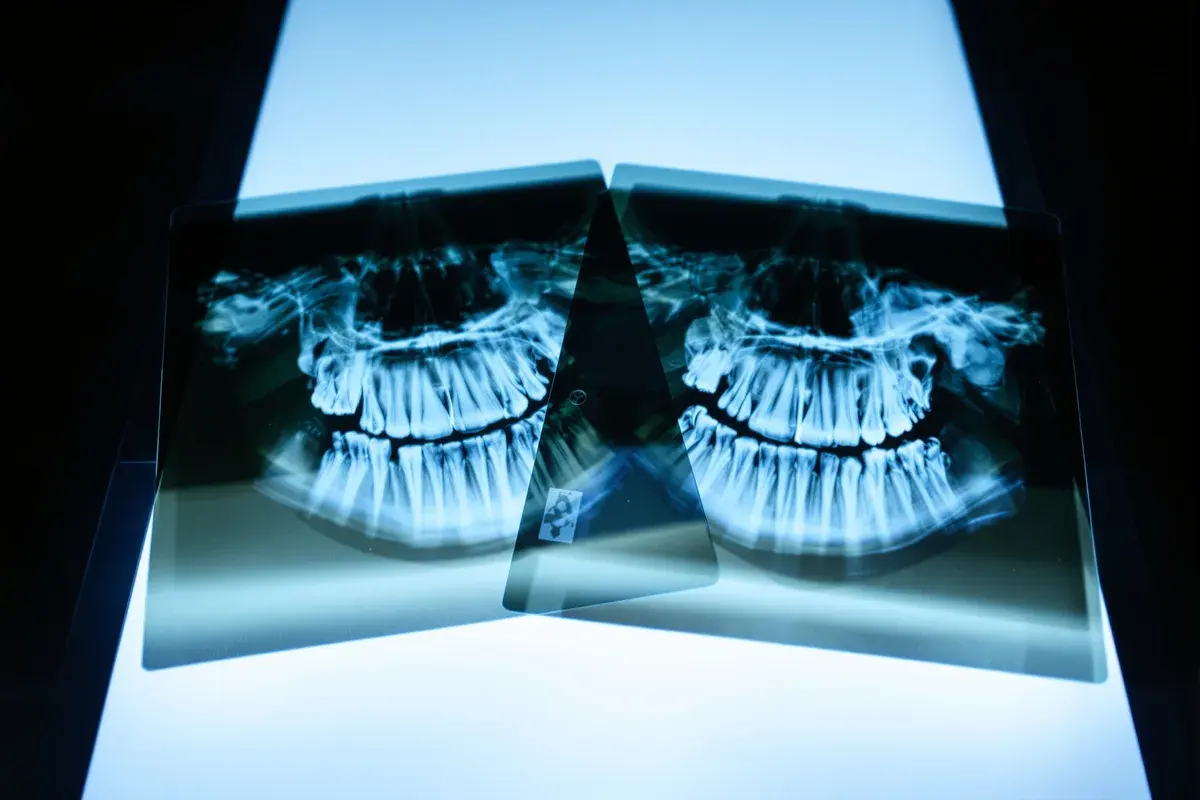
Getting porcelain veneers or crowns in Turkey usually takes one trip of five to seven nights, counted from the night you land. Implants take two stays, generally three to six months apart, and each stay lengthens with the number of implants; full-arch work follows the same pattern with a temporary bridge in between. Composite bonding has no laboratory stage, so two to four nights is usual.
The laboratory cycle behind a four-night offer
A porcelain veneer or crown is milled or pressed, glazed by a technician, tried in your mouth, then usually adjusted and fired again. That cycle stretches a restorative trip to a week, and it is the first thing to check against a four-night offer. At home the same crowns are usually spread over two or three appointments a week or two apart; a trip packs those appointments into consecutive days, and the laboratory steps take as long as they ever did.
Cutting the stay short does not make the technician any faster. What usually goes is the try-in, the appointment where colour, shape and bite are corrected before anything is cemented for good.
Nights in Turkey for each treatment
Ranges, not promises: a case can sit outside them for sound clinical reasons, and the written plan is the version that counts. This table counts nights in Turkey only. Months from first enquiry are counted in a realistic timetable; if “how long” meant how many years veneers last, that answer sits in how long Turkey teeth last.
| Treatment | Trips | Nights each stay | Between stays |
|---|---|---|---|
| Porcelain veneers, lithium disilicate or zirconia crowns | 1 | 5–7 | None |
| Composite bonding or composite veneers | 1 | 2–4 | None |
| Single implant and its crown | 2 | 3–5, then 3–7 | Usually 3–6 months |
| Several implants carrying a bridge | 2 | 5–7, then 5–10 | 3–6 months |
| Fixed full-arch work on four or more implants | 2 | 7–10, then 7–10 | 3–6 months, in a temporary bridge |
| Root canal treatment | 1 | 2–4 | None |
| Whitening or a clean | 1 | 1–3 | None |
| Conventional full dentures | 1, adjustments afterwards | No fixed range | Adjustments at home |
| Bone graft or sinus lift first | An extra stage | Depends on the graft | Adds months |
First-stage implant nights look short because placing an implant takes a morning; most of the treatment is the months of healing at home. Dentures break the pattern. They can be made within one stay, but the weeks of adjustment that follow cannot be squeezed in, which puts dentures in Turkey in a category of its own.
“Teeth in a day” describes the first stay of an implant plan when the implants are stable enough to carry a temporary: a temporary crown or bridge goes on soon after the implants, and the permanent teeth follow on the second stay. Whether that suits a given mouth is a question for dental implants in Turkey; the whole-arch sequence is in All-on-4 in Turkey.
Each night of a crown trip, and what it protects
Exact days vary; what matters is that each stage keeps its own night.
- Arrival. Nothing clinical. Find the supermarket and a pharmacy.
- The examination. X-rays and photographs, plus the veneer mock-up on a veneer plan; the plan is confirmed in writing before any drilling.
- Preparation, on day two or three. Teeth prepared, scans sent to the laboratory, temporaries fitted. Between the last cut and the temporaries going on, the teeth look small and tapered, the stage social media calls “Turkey teeth pegs”; the Turkey teeth process, step by step shows why every full-crown preparation passes through it.
- The empty day. The laboratory is working. Cut it and the try-in moves to the same day as the fitting.
- The try-in. Colour, shape, length, bite. Drop it and the work is cemented the day it comes back from the laboratory, with no chance to change colour or length.
- The fitting. The adjusted work back from the laboratory, the final fitting and a bite check before you leave the chair.
- The review, then the flight. A morning review and your records collected. If the review finds something to adjust, this is the day it uses, so book the flight for the evening at the earliest.
If a plan squeezes this into three days, ask which stage disappeared. A proper schedule names each one; compare it with what a treatment plan should contain.
What stretches a stay, and the spare days that absorb it
These are the ordinary causes, and the ones behind most forum threads about trips that ran over:
- The laboratory’s location. In-house work from digital scans can be turned round in a day or two; an outside laboratory adds courier time to every cycle.
- The number of units. Twenty crowns need more chair time and firings than four.
- What the examination finds. Decay under an old filling, a tooth needing root canal treatment or inflamed gums come first.
- A try-in you turn down. The remake takes laboratory days.
- Sundays and public holidays. Plenty of laboratories do not work on Sundays, and a stay that runs across public holidays in Turkey can lose several days.
Keep a spare day in hand at the end unless your return can move by a day or two, and after surgery add two more on top of the surgeon’s minimum wait before flying. Those days cover a unit that needs another adjustment, a temporary that comes loose or swelling that means you should not fly yet.
Swelling under the tongue, or swelling that spreads towards the eye or down the neck, keeps growing or comes with a high temperature or difficulty swallowing, needs a hospital acil servis (emergency department), and so does bleeding that has not stopped after 15–20 minutes of firm pressure. For difficulty breathing, drowsiness or confusion, call 112 and wait for the ambulance instead of making your own way there.
Book flights only once the schedule is in writing, and do not let a clinic fit the dentistry around a flight already booked. If your leave is fixed, timing it around work and leave does the arithmetic.
What the written schedule should show
- Each appointment by date, with what happens at it.
- The laboratory days, and whether the laboratory is in the building.
- The try-in, listed as an appointment of its own.
- At least one night between the final fitting and the flight, with a review in between.
- What happens to the dates if a unit has to be remade, and how many nights a remake adds.
Flying in from North America or Australia
The nights in the table hold for readers in the US, Canada or Australia; only the travelling either side of them gets longer. Count the journey as a day each way: a direct flight from the US East Coast to Istanbul is in the region of ten hours, and from further west or from Australia there is usually a connection and a much longer day.
With your body clock seven or eight hours out, from New York or Sydney alike, the try-in suffers most, since it asks you to judge colour and shape and to bite naturally; after a long-haul flight, a four-night offer also loses its first night to recovery.
The US Department of Labor notes that the Fair Labor Standards Act, the main federal wage law, does not require paid vacation, so paid leave usually comes down to what your employer offers, and two implant stays mean finding it twice. Insurance and the home review differ by country too: see dental work in Turkey from the US, or the pages for readers coming from Canada and coming from Australia.
Surgery adds a wait before a long flight. A 2023 review in the British Dental Journal sets the minimum at 72 hours after a surgical extraction or an implant and at least two weeks after a sinus lift, and recommends waiting a week after most procedures and six weeks after a sinus lift. Whichever figure you plan to, fly only once pain, swelling and bleeding have settled. Book any surgery early in the stay so that the wait falls inside nights already planned, and check each procedure in flying after dental surgery.
Between the two stays, and flying in temporaries
The second stay is the one people underestimate. An implant is placed into bone and left alone while bone cells grow onto its surface and lock it in place, a process called osseointegration. It runs on biology’s timetable: commonly three to six months before the implant can carry a permanent crown, sometimes less in dense lower-jaw bone, longer where bone was grafted. The implant literature treats immediate, early and conventional loading as separate protocols; immediate loading is a planned option for implants that are stable from the start, and it uses a temporary crown or bridge. No flight booking moves any of this. Loading an implant before it is stable enough is one recognised way to lose it, and when a return date starts pressing, the clinic should be the one saying no.
Give the second trip its own flights and leave from the start; people plan the first carefully, then find a fortnight in autumn harder to arrange than they assumed. Whether a plan needs two trips at all is decided by the rule in how many trips you will need.
On an implant plan it is normal to fly home with a gap or in temporary teeth: a temporary crown or, on a full arch, a temporary bridge worn for months. A porcelain veneer or crown plan usually finishes in one stay, so temporaries at departure mean a second trip, which should already be in the written plan. Ask in writing: “Is what I fly home with the final work, or a temporary?” If one comes off between stays, see when the temporary comes off.
The check-up to book before you fly out
Book a check with a dentist at home for around two weeks after the final fitting, and a bite review at six to eight weeks. Do it before you fly out, since nobody else will, and plan the later visits with follow-up appointments back home. Bring the records: the plan, with each tooth listed by number, material and shade; the X-rays and scans; and each implant’s card, or at least its brand and size. The same applies in the US or Canada, where a new dentist knows only what you hand over.
If something needs seeing between the two stays, NHS England’s 2024 policy on self-funded treatment lets an NHS dentist assess pain or infection and deal with it, but whether the NHS will fix Turkey teeth is a different question. That policy is England’s: Wales and Scotland run their own NHS dental services, and Northern Ireland has Health and Social Care.
Days and nights: the usual questions
How many days do I need in Turkey for veneers?
Plan on five to seven nights for porcelain veneers. Counted from the night you land, that is six to eight days of leave once the travel days are added, and one of those nights is worth keeping spare. Composite veneers built directly on the teeth need no laboratory, so two to four nights is usual. Whether veneers suit your teeth in the first place is the question behind veneers in Turkey.
Is four nights enough for veneers?
For porcelain veneers, usually not. Four nights can work provided the laboratory is in-house, the units are few and the try-in needs no changes, which nobody can promise in advance. If anything has to be remade, there is no time left to try the new unit in before it is cemented. For composite bonding, four nights is generally plenty.
How long do dental implants take in Turkey?
Two stays, as a rule. A single implant usually means three to five nights for the placement, commonly three to six months of healing at home, then three to seven nights for the crown. Several implants or a full arch need longer on each stay, and a graft adds months.
How long does it take to get dentures in Turkey?
The making can fit into one stay of several appointments. A denture is finished by the adjustments over the following weeks, though, and those happen wherever you are. Before booking, ask a practice at home whether it will adjust and reline a denture it did not make.
Can dental implants be done in one trip to Turkey?
Not the final teeth. The surgery can be done in one trip, and so can a temporary tooth or bridge when the implants are stable enough; the permanent crown or bridge goes on once the implants have integrated with the bone, normally on a second stay. Where only one trip is possible, a dentist at home sometimes fits the final work, by prior agreement.
Sources
- NHS England. Avoidance of doubt: clinical policy for self-funded dental treatment requiring NHS intervention. 2024.
- Gallucci GO and others. Implant placement and loading protocols in partially edentulous patients: a systematic review. Clinical Oral Implants Research. 2018.
- Felkai P and others. Dental tourism and the risk of barotrauma and barodontalgia. British Dental Journal. 2023.
- U.S. Department of Labor. Vacation Leave. 2026.
This page is general information, not medical advice. Outcomes vary between individuals and suitability can only be established after an in-person examination and imaging by a qualified dentist.
Related reading
Get an honest assessment first
Tell us what you're dealing with and we'll come back on WhatsApp with a straight answer — including whether travelling is worth it for your case at all. No photos needed to start.