
All-on-4 and full-mouth implants in Turkey: who they suit
All-on-4 in Turkey puts a fixed full arch on four or six implants over two trips. This suits a failing mouth; teeth worth saving need far less surgery.
Reviewed by Yiğit Bal, dentistWritten in Turkey by a dentist. Klinikle is a clinic directory, not a clinic — no practice pays to appear here, and we do not provide treatment. Where a page compares Turkey with treatment at home, read it knowing where it was written.
Last updated:
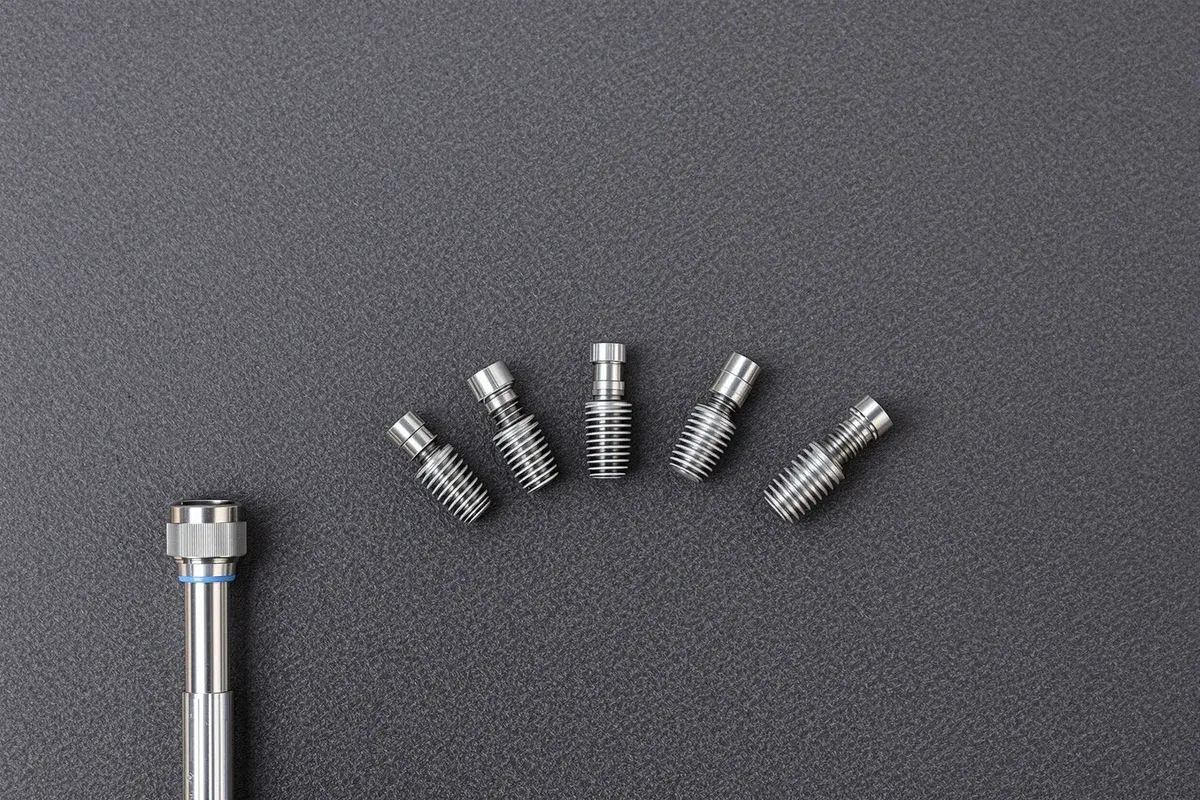
All-on-4 replaces every tooth in one jaw with a full set of new teeth on a fixed bridge, screwed onto four implants or six where the bone calls for it, and in Turkey it is fitted over two trips months apart. Full-mouth implants is a looser name for the same idea. It suits someone whose remaining teeth in that jaw are failing or gone and who wants teeth that stay in at night.
Implants are usually private in England, as the NHS says, so most people compare private plans at home and abroad; what moves an All-on-4 total is in dental implant costs in Turkey. A harder question comes first: if most of your teeth could still be restored, a full arch is far more surgery than you need, and extractions cannot be undone.
What gets fitted, and when
The All-on-4 protocol places four implants, two upright at the front and two angled at the back so the rear ones reach remaining bone without a graft. A single bridge, usually made in one piece, screws onto all of them.
| Provisional bridge | Definitive bridge | |
|---|---|---|
| Fitted | On the day of surgery, or within 24–72 hours depending on the laboratory | Around 3–6 months later, on the second trip |
| Material | Acrylic, sometimes reinforced | Zirconia, or acrylic teeth on a metal frame |
| Bite | Deliberately kept light at the back | Adjusted to meet evenly, back teeth included |
| Fragility | Chips and cracks are common; tell the clinic the same day, since this bridge holds the healing implants together | Built to take normal chewing |
Clinics advertise this provisional stage as “teeth in a day”; how same-day teeth work on a single implant is in dental implants in Turkey.
Four implants or six
Four is the smallest number most full-arch protocols use, and the name has stuck even where six go in. Extra implants share the load: lose one of six and the bridge may survive, whereas on four it is usually at risk. Upper jaws, with softer bone and the sinus above the back teeth, more often get five or six. The count is the surgeon’s call. It rests on a cone-beam CT (CBCT) scan of the bone below the sinus and above the nerve, the margin most of All-on-4 or All-on-6 is about.
The Turkish part of the plan
Two stays, months apart
A full arch commonly means seven to ten nights for the extractions, implants and provisional bridge, three to six months at home wearing it, then seven to ten nights for the definitive bridge. A clinic offering to finish in one visit is compressing the part of the timetable that bone controls. If both jaws are planned, ask whether they will be done in one session or two, and how that changes sedation and each stay.
What you should leave the country holding
Your paperwork is the one record that travels between the two stays. Under Turkey’s Medical Device Regulation of 2021, the facility that places the implants must give you an implant card. It carries your name and each implant’s device, manufacturer, lot or serial number and unique device identifier (UDI); its barcode can be looked up, in Turkish, in ÜTS (Ürün Takip Sistemi, the national product tracking system). Take it home with the packaging labels, the post-surgery X-ray and an invoice in the clinic’s registered name. On a full arch, the system it names lets a dentist at home unscrew the bridge with the right driver and order matching screws.
The licence the building holds
A muayenehane (single-dentist practice) or poliklinik (dental polyclinic, a Turkish licensing category) may not treat anyone under sedation or general anaesthesia on its own premises. That happens in an ağız ve diş sağlığı merkezi (oral and dental health centre) or a dental hospital, both of which must have a general anaesthesia unit, or in another facility with one once the dentist has notified the provincial health directorate in writing. If sedation is planned, ask which facility the surgery happens in and what type it is, then confirm it with the steps in checking a Turkish clinic’s licence before booking flights.
The mouths it suits best
A failing dentition
The core case is advanced gum disease across a whole arch, teeth loose enough that extraction is a question of when or a mouth patched so often it needs another repair every few months.
Years with an upper plate that never settled
An upper denture covers the palate, dulling taste and the feel of hot and cold; a fixed arch leaves the palate uncovered. For anyone who has never got on with a plate, that alone can decide it.
Too little bone at the back of the jaw
Angling the rear implants reaches usable bone without a sinus graft in the upper jaw and keeps clear of the nerve canal in the lower one; numbness of the lip or chin still there the morning after surgery should be reported that day. If you were told conventional implants would need extensive grafting, ask whether angled ones would avoid it. Where even that bone is lacking, some plans use zygomatic implants, anchored in the cheekbone: a larger operation for when the usual routes are closed.
Reasons to hold back, and the smaller alternative
- Anyone with certain medical histories. Head and neck radiotherapy, uncontrolled diabetes and medicines that slow bone turnover (given for osteoporosis and some cancers) all raise the risks of jaw surgery; tell the clinic and your prescribing doctor before you book.
- Anyone with a mostly restorable mouth. Extracting sound teeth to fit a bridge is irreversible, and no implant arch matches healthy teeth of your own.
- Heavy grinders who will not wear a night guard. Four or six implants take forces a full set of roots once shared, and the guard is part of the treatment.
- Smokers who plan to keep smoking through healing. Smoking makes implant failure more likely, and losing a rear implant on a four-implant arch is a major setback (see heavy smoking and full-arch work).
- People who cannot commit to professional cleaning. The tissue around the implants needs a hygienist, at intervals your dentist sets, for life.
- Anyone whose complaint is how healthy teeth look. That is a conversation about crowns or veneers on the teeth you have.
For most people in this group, the comparison to make is not All-on-4 against individual implants. It is All-on-4 against the snap-on denture in dentures in Turkey, an overdenture clipped onto fewer implants, often two in a lower jaw: easier to clean and repair, but taken out at night, which some accept and some find unbearable. Every risk in whether Turkey teeth are safe also costs more to put right on a full arch than on a single tooth.
Same-day extractions: what you are committing to
Often the remaining teeth come out and the implants go in during one operation, an efficient and well-established approach. Even so, be clear: the teeth go that day, the first week brings swelling and bruising and the diet stays soft for weeks while the implants bond to the bone, for as long as the surgeon specifies in writing.
Before you consent, get the extraction list tooth by tooth with the reason for each. Ask what happens if an implant is not firm enough on the day to carry the provisional, and who repairs the bridge if it rubs or cracks at home.
The 2023 British Dental Journal review behind most flying advice gives no full-arch figure. Its minimum is 72 hours after uncomplicated implants or surgical extractions and two weeks after a bone graft or sinus lift, each only once the site has no pain, swelling or bleeding. Its authors advise about a week after most dental work. If a graft is planned, ask whether the first stay should be longer; other waits are in flying after dental surgery.
In Turkey, go straight to a hospital acil servis (emergency department) if swelling spreads towards your eye or down your neck, or grows quickly; if the floor of your mouth swells; if a high temperature or trouble swallowing comes with the swelling; or if bleeding has not stopped after fifteen to twenty minutes of firm pressure. For difficulty breathing, confusion or drowsiness, call 112 and do not make your own way there. At home the same signs mean A&E or an emergency department, and breathing trouble or confusion means calling 999 in the UK, 112 or 999 in Ireland, 911 in the US and Canada, 000 in Australia or 111 in New Zealand, again without making your own way there; more in a dental emergency on holiday in Turkey.
Living with a fixed arch
In the US and Canada a fixed arch is often sold as “permanent dentures”, though its teeth get replaced; fixed or removable full-arch teeth sets it against a snap-on denture.
The bridge sits slightly above the gum, and food collects underneath. It is cleaned daily with interdental brushes and, for most people, a water flosser along the underside. With no natural tooth left, nothing can decay. Skipped cleaning shows up instead as inflamed gum around the implants. Left alone, that inflammation can spread to the bone holding them (peri-implantitis), and bone lost that way is hard to win back. On four implants, losing bone around even one puts the whole bridge at risk. Brush sizes and instruments are in cleaning around implants and bridges.
Expect a review at least yearly, with X-rays when your dentist judges them necessary, and bridge maintenance: screws loosen and acrylic teeth wear. Neither is a disaster provided the system used is written down.
Settle before you travel who will look after the arch at home: whether a practice will unscrew and clean a bridge another clinic made and source screws and abutments for your system. In the UK that usually means a private practice, and the General Dental Council keeps a specialist list for prosthodontics, the specialty of replacing teeth. In the US prosthodontics is recognised by the American Dental Association, so a prosthodontist is the natural first port of call, though many general dentists maintain full arches too. The US Centers for Disease Control and Prevention (CDC) advises the same: line up follow-up care before you leave and bring every record home. The US side is in dental work in Turkey from the US.
Reading a full-arch quote
Implants. The number per jaw, the system and whether the angled rear implants carry multi-unit abutments.
Both bridges. Provisional and definitive, each with its material (acrylic or zirconia for a full arch); a quote naming one has left the other for later.
Extractions and grafts. Each tooth to come out, any graft shown as possible and any reshaping of the ridge.
Sedation and the building. Whether you will be sedated, and where.
The second trip. How many try-ins are planned, and what happens if the bridge goes back to the laboratory.
Maintenance. Which reviews are included, and whether the first visit to unscrew and clean the bridge is one of them.
Offers folding these lines into one total with the hotel are the subject of Turkey teeth packages.
Six checks on the plan itself
Reviews record how people felt about a clinic, and how to read reviews and Reddit threads shows what they can and cannot prove; these questions test the plan.
- How many implants will go into each jaw, and what on my scan sets that number?
- Is the definitive bridge one piece or made in sections, and what happens if one part fractures?
- Can the bridge be unscrewed for professional cleaning, and how often should that be done?
- Which of my teeth could be kept, and on what evidence? Send any Basic Periodontal Examination (BPE) codes from a UK dentist with the scan: they describe the gums around the teeth to be removed and in the other jaw, and a 3 or a 4 calls for fuller charting first (see gum disease before treatment).
- Who reviews the arch after the second trip, and can a dentist at home get the parts and maintain it?
- What is written down about repairs and remakes, and what do those terms leave out?
All-on-4 questions, briefly
What is All-on-4 in Turkey?
All-on-4 in Turkey is a full arch of fixed teeth on four implants in one jaw, fitted over two trips: extractions, implants and a provisional bridge first, the definitive bridge three to six months later. Some jaws need five or six implants, which changes the name more than the method.
Are full-mouth implants the same as All-on-4?
Often they mean the same thing, though the terms are not exact. Full-mouth implants is a catch-all for fixed teeth on implants in one jaw or both; All-on-4 is one way of doing it. Full-mouth restoration is broader and can mean rebuilding your own teeth (see full-mouth restoration in Turkey).
Is All-on-4 a denture?
In the usual sense, no. A denture comes out, while an All-on-4 bridge is screwed to the implants and only a dentist can take it off. Its removable relative is the snap-on denture, held on two or more implants, taken out to clean and easier for a dentist at home to look after.
How long do All-on-4 teeth last?
The implants can last many years while the gum and bone around them stay healthy; inflammation, smoking and overload are the usual threats. The bridge teeth wear sooner, acrylic faster than zirconia, which is harder to repair when chipped. Daily cleaning and regular reviews decide most of it.
Sources
- NHS. Dental treatments. 2026.
- Felkai PP, et al. Dental tourism and the risk of barotrauma and barodontalgia. British Dental Journal. 2023.
- Centers for Disease Control and Prevention. Medical Tourism: Travel to Another Country for Medical Care. 2023.
- British Society of Periodontology. BPE Guidelines. 2019.
- T.C. Sağlık Bakanlığı (Ministry of Health, Turkey). Ağız ve Diş Sağlığı Hizmeti Sunulan Özel Sağlık Kuruluşları Hakkında Yönetmelik (Regulation on Private Oral and Dental Health Facilities, Resmî Gazete 31975, amended 2024). 2022.
- T.C. Sağlık Bakanlığı (Ministry of Health, Turkey). Tıbbi Cihaz Yönetmeliği (Medical Device Regulation, Resmî Gazete 31499), article 18. 2021.
This page is general information, not medical advice. Outcomes vary between individuals and suitability can only be established after an in-person examination and imaging by a qualified dentist.
Related reading
Get an honest assessment first
Tell us what you're dealing with and we'll come back on WhatsApp with a straight answer — including whether travelling is worth it for your case at all. No photos needed to start.