
Dental implants in Turkey: procedure, trips and checks
Implants in Turkey usually mean two trips months apart, as the bone needs that time. Check the scan, the plan and the implant system before anyone drills.
Reviewed by Yiğit Bal, dentistWritten in Turkey by a dentist. Klinikle is a clinic directory, not a clinic — no practice pays to appear here, and we do not provide treatment. Where a page compares Turkey with treatment at home, read it knowing where it was written.
Last updated:
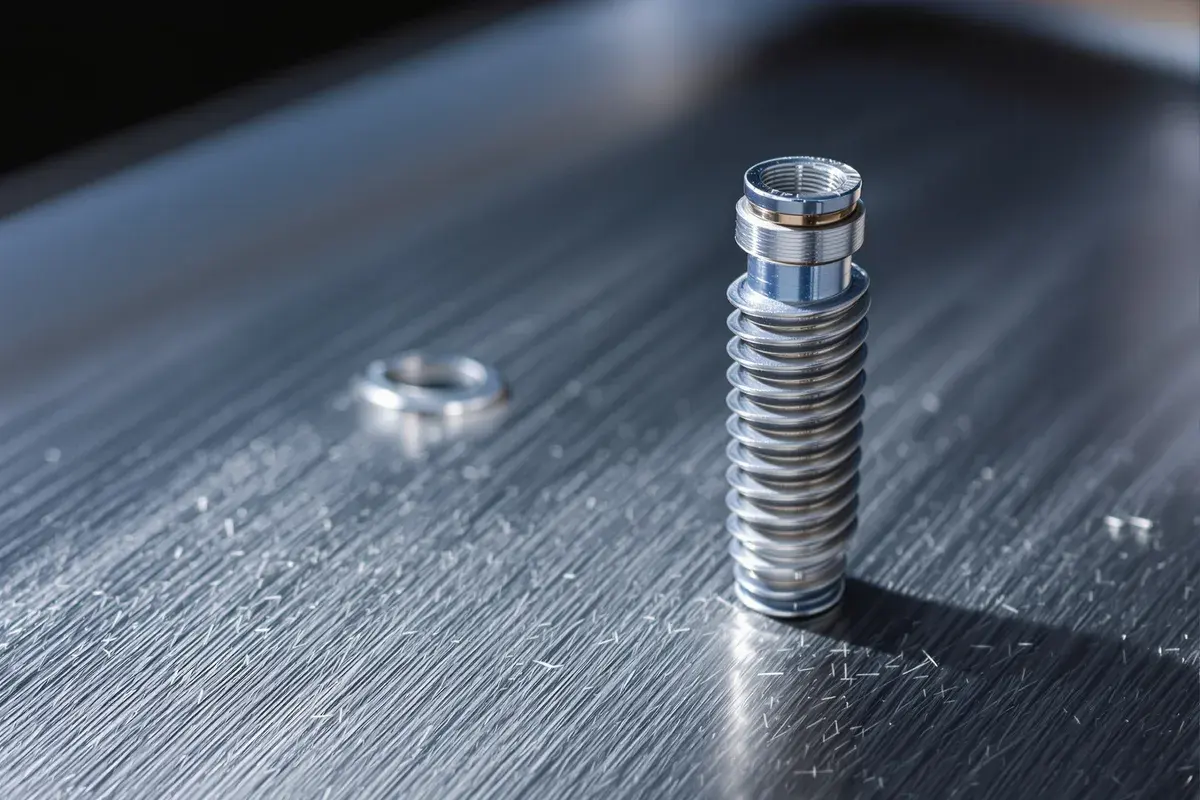
A dental implant is a titanium screw set in the jawbone where a root used to be, with a connector called an abutment and a crown fixed to it later. Dental implants in Turkey usually take two stays, commonly three to six months apart, while bone grows onto the screw. “Turkey teeth” mostly means crowns or veneers on natural teeth, so “Turkey teeth implants” runs two jobs together (more on what people mean by Turkey teeth).
Most people in the UK are comparing Turkey with a private dentist at home, since in England implants are rarely available on the NHS. From the US or Canada, the longer flight makes two stays harder to fit in.
The months of healing in between
On the day it goes in, an implant is held mechanically, its threads gripping the prepared bone (primary stability). Over the next weeks the bone beside the threads is remodelled, old bone broken down before new bone is laid down, so the grip loosens before it strengthens. New bone then grows onto the implant’s textured surface, a process called osseointegration, and this bond takes the force of chewing. Load the implant too hard while the bond is forming and tiny repeated movements let soft tissue grow between implant and bone; an implant wrapped in soft tissue never takes hold. Dense bone in the lower jaw is often ready sooner, softer bone at the back of the upper jaw usually takes longer, and grafted bone longer still. Commonly the final crown waits three to six months for that bond, whatever the fee or the flight dates.
A realistic sequence
A single implant takes three to five nights on the first stay and three to seven on the second, counted from the night you land; the ranges stretch with more implants, a same-visit extraction or slow healing.
| Stage | What happens | Nights in Turkey |
|---|---|---|
| First stay | CBCT scan and plan confirmed; implant placed under local anaesthetic; an extraction can share the visit, a graft or sinus lift lengthens the stay | Single implant 3–5; several implants 5–7 |
| Healing | Bone grows onto the implant | None, commonly 3–6 months at home |
| Second stay | Implant uncovered if it healed under the gum (a minor procedure), stability tested, abutment fitted, scan taken; crown tried in, bite checked and fitted; baseline X-ray and gum measurements | Single implant 3–7; several implants 5–10 |
| Review | X-ray compared with that baseline | None, at home, at intervals your dentist sets |
Crowns, veneers and mixed plans have their nights in how many nights each treatment takes.
Ask for the placement early in the stay: going by a 2023 review in the British Dental Journal, the flight home needs at least 72 hours after an uncomplicated implant, longer while the site is sore, swollen or bleeding (the other procedures are in flying after dental surgery).
Bone grafts and sinus lifts, when the plan grows
The jaw shrinks once a tooth has gone, and where the scan shows too little bone the plan gains a graft to rebuild the ridge or, in the upper back jaw, a sinus lift that raises the sinus floor over graft material. Small grafts and lifts often share the implant appointment, though the same review sets at least two weeks before flying after either, so the first stay is planned around that wait unless the graft gets its own trip. Larger grafts are staged and can turn two stays into three. The upper-jaw operation is described in a sinus lift in Turkey, and the materials and waits for both in bone grafting and sinus lifts.
What “teeth in a day” covers
“Teeth in a day” is the everyday name for immediate loading: a temporary crown or bridge fixed to implants on the day they go in, or within a few days, if the surgeon judges the grip at placement firm enough. A single temporary crown is usually acrylic and kept slightly out of the bite while the grip dips; a full-arch temporary bridge has its bite adjusted to spread the load. The final crown or bridge replaces it on the second stay, so a same-day tooth shortens only the time spent with a gap.
Soft bone, heavy grinding or an infected socket can rule it out on the day. For a whole arch the same idea underlies All-on-4 in Turkey. When an offer promises finished teeth within a week, ask in writing which teeth fitted on the first stay are temporary.
Checks to settle by email
- A 3D scan of each site. A CBCT scan measures bone height and width and shows the lower-jaw nerve and the sinus; a flat panoramic X-ray, by contrast, shows them only in outline, distorts measurements and misses the bone’s width.
- Gum health, in numbers. Ask your UK dentist for your latest Basic Periodontal Examination (BPE) scores and send them with the scan; gum disease before treatment explains the codes.
- Health and habits. Smoking, diabetes control, blood thinners, the bone medicines given for osteoporosis or for cancer that has spread to bone, and heavy grinding can all change the plan.
- Who places it. Get the surgeon’s name in writing. Implantology is not one of Turkey’s nine official dental specialties, so a surgeon called a specialist should hold one of the nine, such as oral and maxillofacial surgery, on their work certificate; how to check a dentist’s qualification shows where to look.
- Where it happens, if you will be sedated. In Turkey a muayenehane (single-dentist practice) or poliklinik (dental polyclinic) may not treat anyone under sedation or general anaesthesia on its own premises, whatever its equipment. That belongs in an ağız ve diş sağlığı merkezi (oral and dental health centre), a hospital or, after notice to the provincial health directorate, another facility with a general anaesthesia unit. Ask which building, then confirm its type with checking a Turkish clinic’s licence.
The minimum an implant quote should name
An implant quote should identify the system by manufacturer and product line, and say whether the abutment is stock or custom-made and from the same system. It should name the crown material and say whether the crown is screwed or cemented, list the scan as its own item and show any graft or sinus lift separately, marked as possible until the scan decides. The temporary tooth worn between stays belongs on it, and so does the second stay: stability check, impression, try-in, fit and bite adjustment. An all-inclusive line for hotel and transfers, as in many Turkey teeth packages, still leaves the clinical items to be listed, and dental implant costs in Turkey shows why totals differ even then.
The record you should come home with
Do not fly home from the first stay without the implant card, often called the implant passport, and on the second stay add the abutment and crown details to the same file. Turkey’s 2021 Medical Device Regulation requires the facility to give you the card, naming the device, its serial and lot numbers, its unique device identifier (UDI) and the manufacturer; dental implants are not exempt. The facility must also record the implant in ÜTS (Ürün Takip Sistemi, Turkey’s product tracking system), where the product’s record can be looked up, in Turkish only, with the card’s barcode and serial number. Both identify the parts for a future dentist; neither judges the surgery.
Ask for the rest of the file too: scans and X-rays as image files, the baseline among them, and the screw that holds the abutment. Without the system name, a loose screw years later can mean a remade crown, one reason to keep the implant brand and passport together. At home, daily cleaning with interdental brushes or floss and reviews against that baseline look after the implant. Infection around it can advance with little pain, so gum that bleeds beside it means booking a check; it is the slower of the two failures described in why implants fail.
Ask anyone promising UK aftercare which practice provides it, what it covers, who pays and whether it can get your system’s parts. Flying back to the US or Canada, find the dentist who will follow the implant up before you go, and take home each implant’s system, model, diameter, length and lot number in writing, as a system not sold locally means parts from abroad. The rest of the planning from North America is in dental work in Turkey from the US.
Cases where an implant is the wrong answer
A gap between two heavily filled or crowned teeth may suit a bridge, since the neighbours need work anyway (an implant or a bridge for a missing tooth goes through the trade-off). A lower jaw with little bone, in someone who wants no grafting, may do better with a denture held by two implants, a choice turning on bone, cleaning and lip support.
At other times the answer is to wait, or to plan elsewhere. Untreated gum disease, chemotherapy under way and poorly controlled diabetes need dealing with first, and a jaw that is still growing rules an implant out for now. Past radiotherapy to the jaw and certain bone medicines leave a lasting risk that the bone will not heal, so the implant is planned with your medical team, often in hospital. These are matters of degree; even so, a clinic should ask about each before offering a surgery date.
Questions people ask about implants in Turkey
Should I get dental implants in Turkey?
It can be a reasonable choice if your gums are healthy or treated, you can make two trips months apart and a dentist at home will review the implant. It suits you less if you cannot get away twice or if grafting may add a third stay.
Does implant surgery hurt?
Implants are normally placed under local anaesthetic, so most people feel pressure and vibration and little sharp pain. Soreness and swelling follow for several days, more so after grafts. Swelling that spreads towards the eye or neck, grows fast or reaches under the tongue, a high temperature or trouble swallowing alongside a swelling, or bleeding that 15–20 minutes of firm pressure has not stopped needs a hospital straight away; for difficulty breathing or confusion, call 112 in Turkey or, at home, 999 (911 in North America, 000 in Australia, 111 in New Zealand) and let the ambulance come to you (a dental emergency on holiday in Turkey).
Is it safe to get dental implants in Turkey?
The surgery carries the same risks in Turkey as elsewhere: infection, an implant that does not take and nerve or sinus damage where planning was poor. What shifts the risk most is the plan, the dentist and follow-up at home, all checkable before you book.
What happens if an implant fails after I get home?
With swelling or pus, see a dentist at home that day. Swelling that spreads or grows fast, or comes with a high temperature or trouble swallowing, means A&E or an emergency department instead. Without any of these, write to the clinic first, with photographs and any X-ray taken at home. An implant that fails before the crown is fitted usually comes out, and the site heals before another is tried. Who pays for a further trip or treatment depends on the written agreement; a replacement at home is normally private.
Is there an age limit for dental implants?
There is no upper age limit as such; for older patients the questions are health, medicines, bone and whether the implant can be kept clean. At the younger end growth must have finished, since an implant placed too early can end up shorter than the teeth beside it as they keep moving with the jaw.
Can I have implants in Istanbul, Antalya or Alanya?
Yes. Clinics in all three cities place implants, and the checks on this page apply in each, from the scan to the implant card. Choose with the second stay in mind: a city with frequent direct flights from home makes the return trip simpler.
Sources
- NHS. Dental treatments. 2026.
- Felkai PP, et al. Dental tourism and the risk of barotrauma and barodontalgia. British Dental Journal. 2023.
- Berglundh T, et al. Peri-implant diseases and conditions: consensus report of workgroup 4 of the 2017 World Workshop. Journal of Clinical Periodontology. 2018.
- T.C. Sağlık Bakanlığı (Ministry of Health, Turkey). Tıbbi Cihaz Yönetmeliği (Medical Device Regulation, Resmî Gazete 31499), article 18. 2021.
- T.C. Sağlık Bakanlığı (Ministry of Health, Turkey). Ağız ve Diş Sağlığı Hizmeti Sunulan Özel Sağlık Kuruluşları Hakkında Yönetmelik (Resmî Gazete 31975, amended 2024). 2022.
- Türkiye Büyük Millet Meclisi. 1219 sayılı Tababet ve Şuabatı San’atlarının Tarzı İcrasına Dair Kanun, Ek-2 çizelge (Law No. 1219). 1928, as amended.
This page is general information, not medical advice. Outcomes vary between individuals and suitability can only be established after an in-person examination and imaging by a qualified dentist.
Related reading
Get an honest assessment first
Tell us what you're dealing with and we'll come back on WhatsApp with a straight answer — including whether travelling is worth it for your case at all. No photos needed to start.