
Implants or dentures: three options and who each one suits
Bone, general health and the number of trips you can manage decide between implants, implant-retained dentures and a well-made conventional denture.
Reviewed by Yiğit Bal, dentistWritten in Turkey by a dentist. Klinikle is a clinic directory, not a clinic — no practice pays to appear here, and we do not provide treatment. Where a page compares Turkey with treatment at home, read it knowing where it was written.
Last updated:
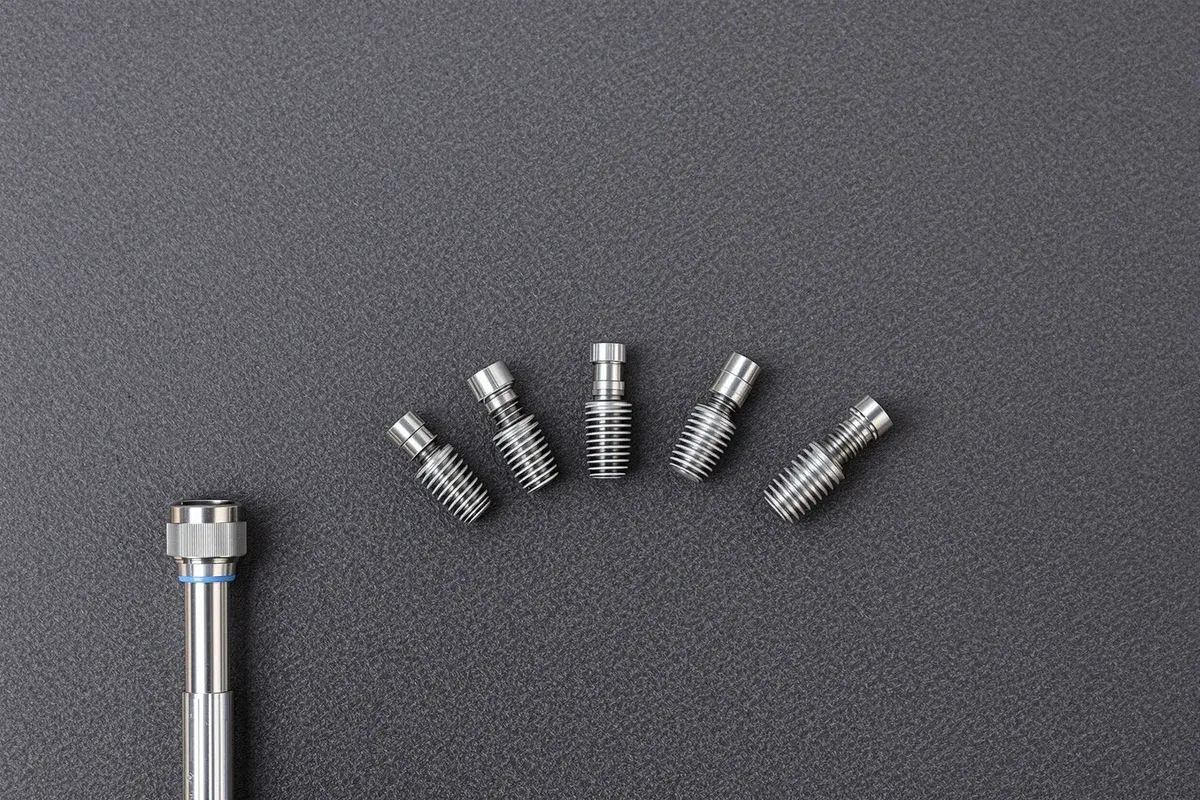
Whether implants or dentures are better has no general answer, but the trade-off is clear. Where bone and health allow surgery, implants hold teeth far more steadily, as a fixed bridge or as a denture clipped onto them. A conventional denture (a set of false teeth) needs no surgery and often one trip, but moves more, a lower one especially. Bone weighs most, then general health, then the number of trips you can make.
Preference matters, but it comes fourth. Where the bone or the medical history rules surgery out, a properly made denture is a treatment in its own right, not a second best.
For British readers the question usually arrives with a lower denture that has never sat still, or a full-arch quote listing every remaining tooth for extraction. Dentures can be provided on the NHS in England where they are needed to treat a dental problem; implants, by contrast, are usually only available privately.
Three options, with the clip-on in the middle
A conventional denture sits on the gum and relies on suction and the fit of its base. An implant-retained overdenture, the snap-on kind, sits between the other two. It clips onto implants, typically two to four for a lower jaw and four or more for an upper, and comes out to be cleaned. In the lower jaw it has the strongest evidence behind it. A fixed implant bridge is screwed to four or more implants and stays in until a dentist unscrews it. In the US this design is sold as “permanent dentures”, a name taken apart in fixed or removable full-arch teeth.
In randomised trials, people with no lower teeth rated an implant overdenture as more satisfying than a new conventional denture, although a 2009 meta-analysis could not say by how much. Reddit threads give the day-to-day detail of living with each but cannot judge your bone or health; test them against the checks in how to read reviews and Reddit threads.
For one or two gaps among teeth you are keeping, the comparison is an implant or a bridge for a missing tooth.
Pros and cons side by side
The three options trade surgery, healing time and travel against how firmly the teeth stay put:
| Conventional denture | Implant-retained overdenture | Fixed implant bridge | |
|---|---|---|---|
| Surgery | None | Usually two to four implants in the lower jaw; more in the upper | Usually four or more implants |
| Bone it needs | Little; the ridge shape matters more | Enough at a few chosen sites | Enough along the arch, or grafting first |
| Trips abroad | Often one; adjustments follow at home | Usually two, months apart | Usually two, months apart |
| Daily care | Out every night and brushed outside the mouth | Out for cleaning; gum and implant heads brushed too | Cleaned in place, under and around |
| Strengths | No surgery; quick to reline or remake | Far steadier than a plain lower denture | Closest to natural teeth; nothing to take out |
| Drawbacks | Weakest chewing; a lower one is often loose | Attachment inserts wear and need replacing | Hardest to clean; a repair can be a large job |
| How long it lasts | Years with care, relined as the ridge shrinks | Implants usually outlast the denture | Implants usually outlast the teeth on them |
The ten-year studies gathered in how long implants last find most implants still in place; the teeth on top are renewed first.
Three limits a consultation should test
Bone is the gatekeeper
Once a tooth comes out, the ridge of bone that held it starts to shrink. The change is fastest in the first months, carries on slowly for years and is usually greater in the lower jaw. A conventional denture rides on that shrinking ridge without slowing it, and its fit loosens year by year. An implant passes chewing load into the bone around it, and that bone stays in use. Placing one, though, needs enough bone in both height and width, and width is what a flat panoramic X-ray cannot show; a cone beam CT (CBCT) scan captures it in three dimensions. Where bone has run out, the choices are a graft first, which adds months and often a trip, a design needing fewer implants or a plan without them.
Health and habits
Age on its own rules out less than you might expect (age and implants). Smoking, poorly controlled diabetes and untreated gum disease all raise the chance that an implant fails to take hold or runs into trouble later. Radiotherapy to the head or neck, and some medicines that alter bone turnover, including some given for osteoporosis, need declaring to the surgeon before planning starts. Each of these shifts the balance without settling it on its own. Several together can tip it towards a denture. A clinic that has not asked for your medical history has weighed none of it.
Time, and the number of flights
An implant cannot take full chewing load until bone has grown onto it, which in most mouths takes three to six months, and no annual-leave calendar compresses that. Either implant option usually means two trips, with the healing done at home. A graft adds another stage. A conventional denture can often be made in one stay, provided that a dentist at home will ease the sore spots that show up once you are eating normally. “Teeth in a day” is a legitimate technique, but what goes in that day is a temporary bridge; the final one is fitted on the second stay. Nights per stay for each route are in how many trips you will need. If two trips are out of the question, that alone points to a conventional denture abroad or implants nearer home.
The upkeep after fitting
A conventional denture comes out every night unless your dentist says otherwise (sleeping with dentures in), and the NHS advises brushing it with soap or washing-up liquid, since toothpaste can damage it. Expect relines as the fit loosens; an immediate denture, fitted on the day of extraction, often needs adjusting or replacing within a year.
An overdenture needs all of that, plus new inserts as the old ones wear with every click. A fixed bridge is brushed underneath every day with interdental brushes or a water flosser, and now and then unscrewed at the practice for a professional clean; cleaning around implants and bridges shows the technique.
The tissue around implants can become inflamed, and once the bone is involved the condition is called peri-implantitis. A 2015 systematic review put its average prevalence at about one patient in five (22%), with studies ranging from 1% to 47%, partly because they defined the disease differently. Daily cleaning, regular checks and not smoking all lower that risk.
A quote for each option, item by item
Each route has its own parts, and a quote should name every one:
- Conventional denture: try-ins, the base material, who adjusts it at home and whether a first-year reline is included (dentures in Turkey lists the stages).
- Overdenture: the number of implants, the implant system, the attachment type, spare inserts and the denture worn while the implants heal.
- Fixed bridge: implants, abutments, scans, the temporary bridge, the final bridge’s material and the second trip; an All-on-4 in Turkey quote should list the same items.
For either implant route, ask for the implant system by name on the quote and for the implant card once the implants are in (the implant brand and passport). Dental implant costs in Turkey breaks the implant lines down further. On the NHS, implants come through hospital restorative dentistry departments, which set narrow criteria of their own and take referrals from a dentist; without one, start with NHS dentist waiting lists.
Six questions before any tooth comes out
- How much bone is there at each planned site, and can you show me on the 3D scan?
- Would an overdenture do the job here, and if you advise against it, why?
- Which of my remaining teeth are you proposing to remove, and are any of them sound?
- What happens if an implant hasn’t taken hold by the time the final teeth are due?
- Which dentist near home has agreed to see me in the first year, and how often?
- What will I wear while the implants heal, and can I eat and speak normally in it?
Between extractions and the final teeth there are usually months, and a temporary denture or bridge has to fill them. If the clinic cannot describe it, hold off on extractions until it can.
Sound teeth on an extraction list are the other point to stop at. A whole arch is simpler to plan than a mix of kept teeth and implants, and that convenience is no reason to lose a healthy tooth. Before you agree to any extraction, book a dentist at home to look at the same scan and give you a written opinion on each tooth.
Sources
- NHS. Dentures (false teeth). 2025.
- NHS. Dental treatments. 2026.
- Guy’s and St Thomas’ NHS Foundation Trust and King’s College Hospital NHS Foundation Trust. Restorative dentistry referral acceptance criteria. 2025.
- Emami E, et al. Impact of implant support for mandibular dentures on satisfaction, oral and general health-related quality of life: a meta-analysis of randomized-controlled trials. Clinical Oral Implants Research. 2009.
- Derks J, Tomasi C. Peri-implant health and disease: a systematic review of current epidemiology. Journal of Clinical Periodontology. 2015.
- T.C. Sağlık Bakanlığı (Republic of Türkiye Ministry of Health). Tıbbi Cihaz Yönetmeliği (Medical Device Regulation, Resmî Gazete 31499), article 18. 2021.
This page is general information, not medical advice. Outcomes vary between individuals and suitability can only be established after an in-person examination and imaging by a qualified dentist.
Related reading
Get an honest assessment first
Tell us what you're dealing with and we'll come back on WhatsApp with a straight answer — including whether travelling is worth it for your case at all. No photos needed to start.