
Getting your records out of a Turkish clinic
Ask at the final appointment, in the building. If you are already home, Turkish law still gives you a right of access — and a written request starts a clock.
Reviewed by Yiğit Bal, dentistWritten in Turkey by a dentist. Klinikle is a clinic directory, not a clinic — no practice pays to appear here, and we do not provide treatment. Where a page compares Turkey with treatment at home, read it knowing where it was written.
Last updated:
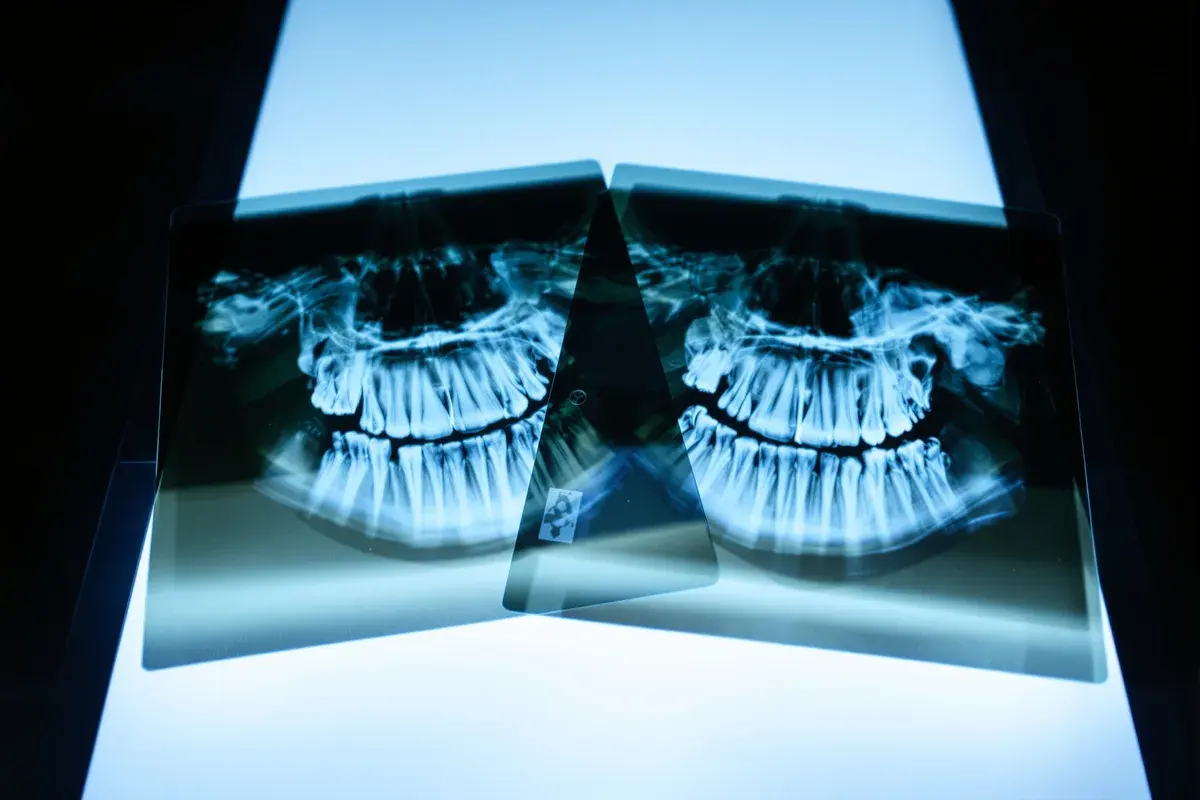
Ask for your records at the final appointment, in the building, while everyone involved is still in the same room. That is the moment you have the most influence and the least friction, and it is the difference between walking out with a memory stick and spending four months chasing an email address.
If you have already flown home without them, you’re not stuck. Turkish law gives you a right of access to your own health data, a written request to the clinic as data controller starts a thirty-day clock, and there is a route to a national authority if the clock runs out. That route is slower than asking a receptionist, which is the entire argument for asking the receptionist.
The best time to ask is before the last appointment ends
Say it at the start of the visit, not as you are leaving: “Before I go today I need my notes, my X-rays and the implant details on a memory stick, and a printed copy.” Files get assembled by whoever is free, so a request made an hour ahead is one that can be met.
Three things to do while you are physically there:
- Photograph the implant packaging labels. Each fixture comes with peel-off stickers carrying the manufacturer, reference and lot number, which is also how you confirm the brand you were promised is the brand you got. A photograph of them on your phone has rescued a great many people whose paperwork never arrived.
- Read the notes before you leave. Check the tooth numbers match what was actually done and that the treating dentist’s name appears. Corrections are easy while someone is standing next to you.
- Export the message thread to your own email. Coordinators move on and numbers get reassigned. The conversation holding the plan, the materials and the promises should not live only inside an app on your phone.
The words that get you the right file
Turkish clinics are used to these requests, but only if the request names what it wants. A message asking for “my records” produces a one-page summary. This produces a file.
| What you need | Ask for it by this name | The form to insist on |
|---|---|---|
| Full treatment record | Hasta dosyası / tedavi kayıtları | Dated, tooth by tooth using FDI numbers, signed and stamped |
| Summary letter | Epikriz | Signed by the dentist who treated you, with their full name |
| Panoramic X-ray | Panoramik röntgen | The original image file at full resolution, with the date |
| Individual X-rays | Periapikal röntgen | Image files, not a photograph of a screen |
| 3D scan | Dental tomografi (KIBT/CBCT) | The complete DICOM folder, not a viewer-only disc or a screenshot |
| Digital impressions | Ağız içi tarama / STL dosyaları | The STL files themselves |
| Implant details | İmplant kimlik kartı / implant pasaportu | Brand, system, reference, lot number, diameter and length per tooth |
| Materials used | Kullanılan materyaller | Crown material and shade; whether each crown is screwed or cemented |
| Consent you signed | Aydınlatılmış onam formu | A copy of the document you actually signed |
| Guarantee terms | Garanti belgesi | Written, stating what is covered, for how long, and what voids it |
| Who treated you | Hekimin adı ve diploma tescil numarası | The name and registration number, not the clinic’s name |
| Proof of treatment | Fatura | Issued in your name, showing the dates |
Two rows carry more weight than the rest. Without the implant line, a dentist at home cannot source a component or unscrew a crown, for reasons spelled out in why the implant brand matters. Without the guarantee line, everything you were told verbally has evaporated. A complete set has a shape of its own, described in the records you should leave Turkey with.
What you can ask for after you are home
The right of access is not a favour. Turkish patient rights rules entitle you to examine and obtain a copy of your own file, and personal data protection law gives you the right to ask a data controller (here, the clinic) what data it holds about you and to receive it. A properly made written request obliges a response within thirty days.
Make it look like what it is:
- Send it to the clinic’s official email address, not only to the coordinator you dealt with.
- Put a clear subject line in both languages: Kişisel sağlık verilerine erişim talebi — request for access to personal health data.
- Give your full name as it appears on your passport, your passport number, your dates of treatment and the name of the dentist.
- List the items you want, using the Turkish terms from the table.
- Ask for a reply by email, and state the date of your request in the body of the message.
- Ask how long the clinic retains patient files, and get that answer in writing. Do not assume your file will exist indefinitely.
Keep every reply. The dates matter for anything that follows.
If nobody replies
Work through this in order, and do not skip straight to the end, because each step is evidence for the next.
- Chase in writing after two weeks, restating the original date. Copy any second address the clinic publishes.
- Send a formal written notice. In Turkey a notice served through a notary carries real weight, and clinics that ignore emails frequently answer these. It can be arranged from abroad through a Turkish lawyer.
- Complain to the data protection authority. The Kişisel Verileri Koruma Kurumu handles complaints about a controller that has not answered an access request. There are time limits running from your request and from any response, so the dates you kept become the point.
- Raise it with the provincial health directorate — the İl Sağlık Müdürlüğü for the province where the clinic operates. This is the clinical regulator, and record-keeping is within its scope.
- Use the national channels. SABİM, the health ministry’s line, takes complaints on 184, a short number answered in Turkish and dialled from within Turkey, and routes them to the relevant directorate. CİMER, the presidential communication centre, signs people in with a Turkish identity number and is open to Turkish citizens and foreign residents of Turkey, so it is not a dependable route for a visitor. For help finding the right office, HealthTürkiye’s support line is +90 850 288 38 38.
Silence at step one usually predicts silence at step two, and it tells you something about how the guarantee would be honoured, since the reasons a guarantee gets refused often begin with a file nobody will send. If the clinic stops replying to you follows that pattern to the end; complaints and where they go separates what each of those bodies can do about the treatment itself from what it cannot.
What to do with the file once you have it
Send the whole thing to your dentist at home before you need an appointment, not after, so the first conversation about a problem is not also the first conversation about your history. Keeping your own dentist in the loop says what to send and when.
A file that exists in one place is a file with a single point of failure. Clinics reorganise, cloud links expire and passwords get lost, and the people who still have their records five years on are the ones who kept the images somewhere other than a phone and a printed, stamped copy on paper. A stamped sheet in a drawer with a dentist’s name on it outlasts all of them.
This page is general information, not medical advice. Outcomes vary between individuals and suitability can only be established after an in-person examination and imaging by a qualified dentist.
Related reading
Get an honest assessment first
Tell us what you're dealing with and we'll come back on WhatsApp with a straight answer — including whether travelling is worth it for your case at all. No photos needed to start.