
A clear aligner attachment has come off
Keep wearing the aligner, glue nothing back and tell the clinic. How to check the tray still seats, and who rebonds it if treatment began abroad.
Reviewed by Yiğit Bal, dentistWritten in Turkey by a dentist. Klinikle is a clinic directory, not a clinic — no practice pays to appear here, and we do not provide treatment. Where a page compares Turkey with treatment at home, read it knowing where it was written.
Last updated:
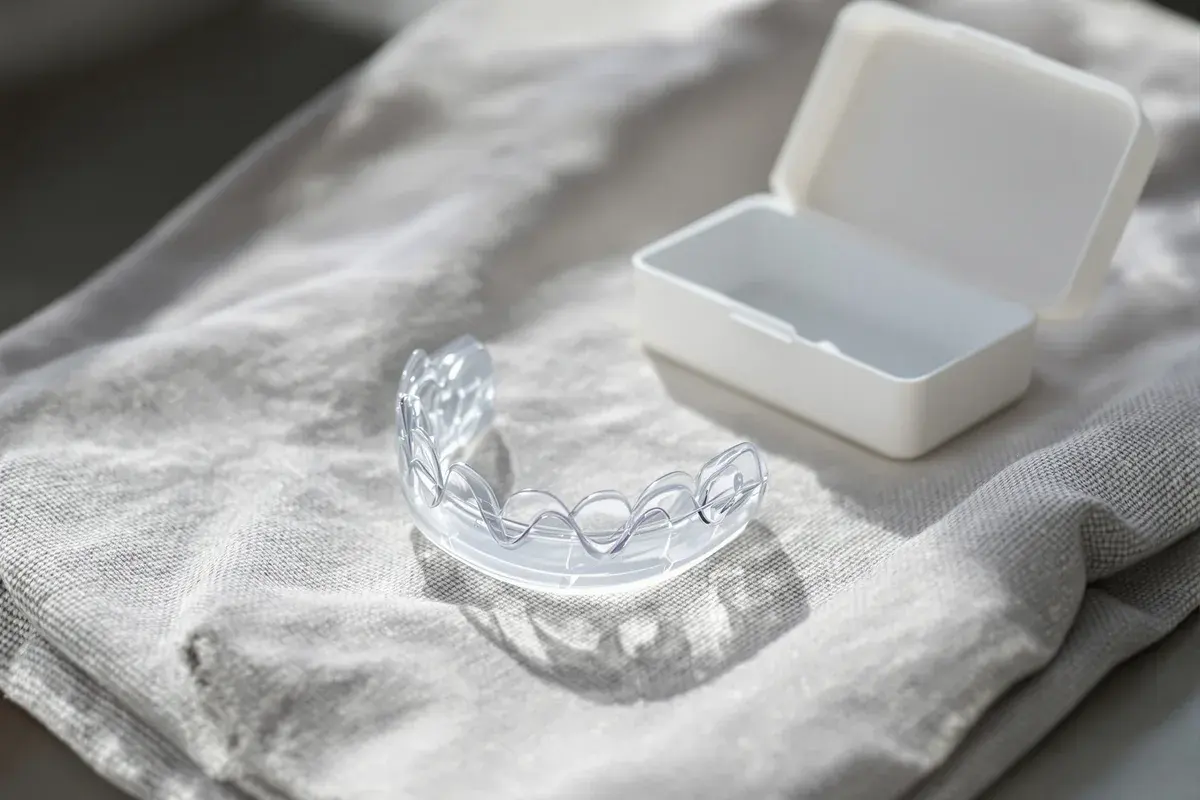
You take the aligner out after lunch, run your tongue along your teeth and one of the small tooth-coloured bumps has gone. Sometimes it turns up in the tray; more often it has been swallowed with the sandwich, which does no harm at all.
Keep wearing the aligner and let the clinic know. A single lost attachment is not an emergency, but it is not something to leave until your next scheduled review in two months either, because that tooth has stopped being moved properly.
What the bump was doing
An attachment is a small blob of composite, the same family of material used for white fillings, bonded to the front of a tooth in a precise shape. A smooth plastic tray can tip a tooth well enough, but it struggles to grip one firmly enough to rotate it, pull it down or move its root. The attachment gives the tray something to push against. Each one is a handle for a particular movement on a particular tooth, and its position and angle were planned in the software along with everything else.
That is why losing one matters more than its size suggests. The tray still fits over the tooth, but the handle it was designed to push on is no longer there. The general picture of how aligner treatment runs, and why it depends on appointments more than people expect, is in braces and aligners abroad.
Check the fit before you do anything else
Put the aligner back in and look closely in good light, ideally with a phone torch.
- The tray sits fully down on every tooth. Carry on as normal and tell the clinic within a few days. They will say whether rebonding can wait until the next planned visit.
- There is a visible air gap between the tray and that tooth, usually at the biting edge. The tooth may already be lagging behind the plan. Keep wearing the current tray, do not move on to the next one in the sequence, and contact the clinic that week.
- More than one attachment has gone, or the tray is hard to push on. The plan needs looking at sooner, so contact the clinic within a day or two.
The instinct to move to the next aligner on schedule is strong, especially when you have a box of them. Changing trays over a tooth that is not tracking only widens the gap.
Things not to do at home
Do not glue it back. Superglue, denture adhesive and the kits sold for repairing crowns are all wrong for this, and they leave a surface the dentist then has to clean off the enamel. You do not need to keep the piece either: attachments are rebuilt from fresh material using the template tray from the start of treatment, which puts the new one in exactly the same place and shape.
If only part of it broke away and the rough edge catches your tongue or cheek, leave it alone. Filing it with a nail board is a common temptation and a reliable way to scratch the enamel next to it. A dull, matt patch where the attachment used to be is also normal; that is the bonded surface, and it is polished when the attachment is replaced or at the end of treatment.
When treatment began in another country
Remote-monitored aligner treatment is where this gets awkward. The clinic that planned your case can look at your scan photos from abroad, and it can tell you whether to hold or carry on. What it cannot do from there is put the attachment back. That needs a dentist, the template tray and the composite, in the same room as your mouth.
Before treatment started, someone should have answered the question of who does this at home. If they did not, now is the time, and the request to a local practice is easier than people fear: you are asking for a single attachment to be rebonded using a template you bring, not for them to take over your treatment. Many general practices will do that as a one-off; some will not touch an active orthodontic case planned elsewhere, and that is their call. Follow-up appointments once you are home goes through how to arrange that kind of help before it is needed, which is the version that works.
Take the template tray if you were given one. If you were not, ask the clinic abroad to send the digital file to the practice; without it the attachment can be rebuilt, but not with the same accuracy.
A message the clinic can act on
Clinics running remote cases get a lot of vague messages. One that answers their questions in advance gets a faster and more useful reply:
Attachment lost from upper left canine this morning. Currently on aligner 14 of 32, which I started 10 days ago. Tray seats fully / has a gap at the tip of that tooth (photo attached). No other attachments missing. I have / do not have the template tray. I am in the UK until at least March. What would you like me to do, and can you send the attachment file to a local dentist if needed?
Attach a close photo with the aligner in and one without.
What it means for the plan
A short gap is usually absorbed. If the missing attachment goes unnoticed for weeks, the tooth falls behind and the plan may need a mid-course scan and new trays, which adds time. How much depends on the movement that tooth was supposed to make, and only the clinician watching your scans can judge it.
Attachments come off most often at the moment of removing the tray. Take it out from the back teeth first, working forward, not by hooking a fingernail behind the front teeth, and take the tray out every time you eat. Eating and drinking with clear aligners in explains why that second rule is about more than attachments.
This page is general information, not medical advice. Outcomes vary between individuals and suitability can only be established after an in-person examination and imaging by a qualified dentist.
Related reading
Get an honest assessment first
Tell us what you're dealing with and we'll come back on WhatsApp with a straight answer — including whether travelling is worth it for your case at all. No photos needed to start.