
Eating and drinking with clear aligners in
With aligners in, plain water is the only safe drink. Why coffee, juice and fizzy drinks come out with the tray, and how to cope on travel days.
Reviewed by Yiğit Bal, dentistWritten in Turkey by a dentist. Klinikle is a clinic directory, not a clinic — no practice pays to appear here, and we do not provide treatment. Where a page compares Turkey with treatment at home, read it knowing where it was written.
Last updated:
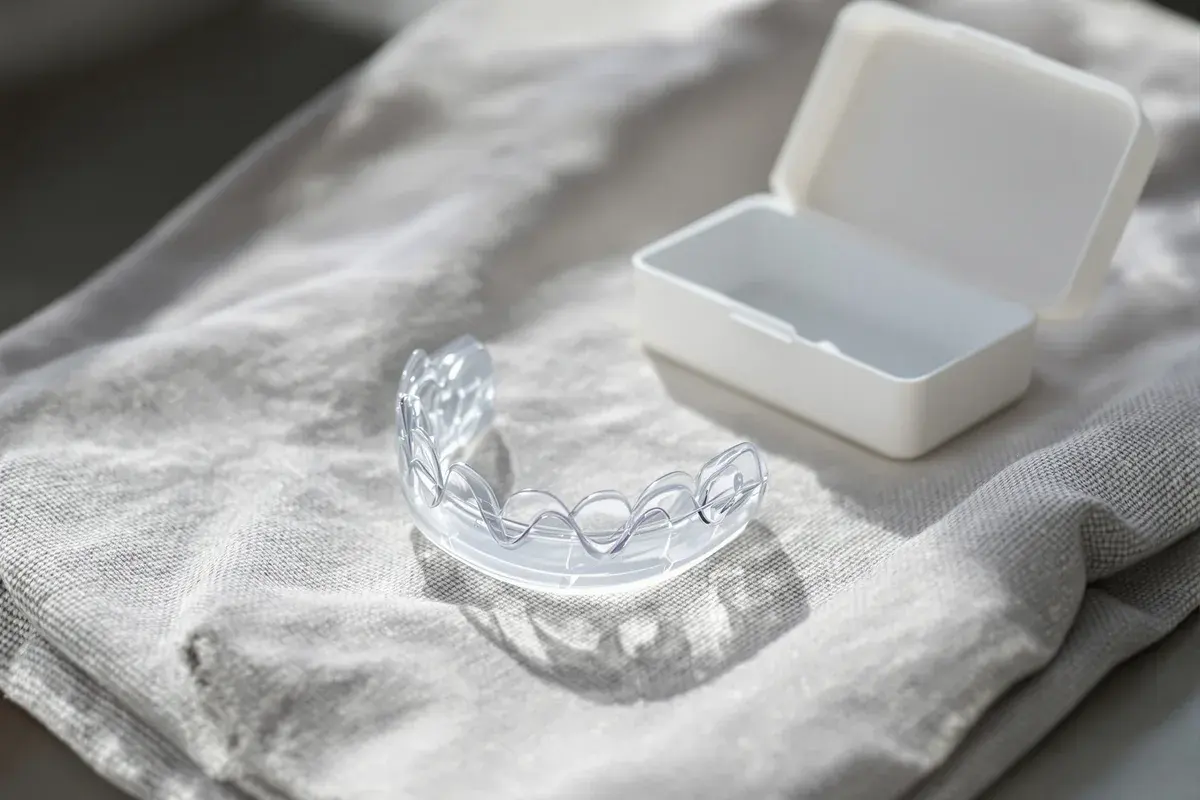
The rule is short: with aligners in, you drink plain water and nothing else, and you do not eat at all. Tea, coffee, juice, fizzy drinks and every snack mean taking the trays out, and your teeth should be clean before they go back in.
It sounds fussy, and it is the rule people bend first. The reasons are specific, though, and once you know them it is easier to decide where a little flexibility is harmless and where it is not.
What can and cannot go in with the trays
| With aligners in | Allowed? | The reason |
|---|---|---|
| Plain water, cold or lukewarm | Yes | Leaves nothing behind and does not affect the plastic |
| Any food, including a biscuit | No | The tray can crack, and food packs underneath it |
| Hot tea or coffee | No | Heat can distort the plastic; both stain |
| Juice, squash, fizzy drinks, sweetened tea | No | The liquid is trapped against your teeth |
| Sparkling water with nothing added | Generally fine | Plain carbonated water is far less of a concern; flavoured versions often contain acid |
| Chewing gum | No | It sticks to the tray and can lift it |
Why sugary drinks are worse inside a tray
Normally, saliva is washing over your teeth all the time. It clears away sugar, neutralises acid and brings the minerals that help enamel recover after each drink. An aligner fits tightly over the teeth, and that tight fit is exactly what it needs to move them, but it also means anything that seeps inside is held against the enamel and shielded from saliva. A sip of orange juice that would be rinsed away within minutes in an open mouth can sit in the tray for much longer. Sip that juice through the morning, with the trays in, and you have built a small reservoir of sugar and acid against the enamel that no brushing reaches until you next take them out. Decay and acid erosion both follow from that, and the front surfaces where they show first are the ones you were straightening teeth to improve. Diet drinks remove the sugar but not the acid, so they do not solve it.
Heat, stains and the plastic itself
Aligners are thin thermoformed plastic, shaped by heat over a model of your teeth. Enough heat can change that shape, and a tray that has lost its shape no longer applies the force it was designed to. A single hot sip is unlikely to ruin one, but a daily coffee with the trays in is a real risk, and so is rinsing them under the hot tap or leaving them on a sunny windowsill or a car dashboard. Clean them in cool or lukewarm water.
Coffee, tea, red wine and curry also stain. The trays themselves go yellowish, which matters less because they are replaced every week or two. The attachments bonded to your teeth stain too, and those stay for the whole treatment. If one does come away, a clear aligner attachment has come off explains what to do.
Wear time is the hidden cost of every snack
Most aligner plans assume you wear the trays for around twenty to twenty-two hours a day. Every meal and every drink other than water comes out of that allowance, along with the time spent cleaning your teeth before the trays go back.
Three meals and two coffees, taken quickly, fit comfortably. Grazing does not. A biscuit at eleven, coffee drunk slowly over an hour at your desk and a glass of wine through the evening can take several hours off the day without it feeling like much, and teeth that do not get the hours do not keep up with the trays. That is how a plan drifts, and why some people end up needing more trays than they were told at the start.
Grouping food and drinks together solves both problems at once: fewer hours with the trays out, and fewer occasions on which the teeth need cleaning.
Putting the trays back after eating
- Brush your teeth. If that is impossible, rinse thoroughly with water, swishing it around the front and back of every tooth.
- Rinse the trays in cool water.
- Push them back into place and make sure they seat fully, particularly at the back.
Always take the case. A tray wrapped in a napkin at a restaurant is the most common way aligners end up in a bin.
Travel days and holidays
Planes, long drives and holidays are where the rules strain. On a flight, keep a bottle of water for the trays-in hours and plan to eat the meal all at once instead of picking at snacks. A small travel toothbrush in your pocket, not your hold luggage, makes the bathroom stop after a meal realistic. On holiday, drinks come in long, slow sessions, and the choice is effectively between taking the trays out for the evening and accepting that some wear time is lost, or keeping to water. Neither is disastrous for one night; the same pattern for a fortnight is how a case slips.
If your treatment is being monitored remotely from another country, tell the clinic when you are travelling and wearing time will be short. They can decide whether to hold you on a tray for longer. Aligners are also easier to lose on the road than at home, so if you are going away mid-treatment, ask whether you should carry the previous set as a spare. Braces and aligners abroad covers how those arrangements should be set up at the start.
Where water-only is non-negotiable
Being relaxed about sparkling water is reasonable. Being relaxed about sweet or acidic drinks with the trays in is not, and no amount of later brushing makes up for it. Staining is cosmetic and temporary; enamel lost under a tray for eighteen months is neither, and no dentist can give it back afterwards. Staining on new restorations is a useful companion if you also have crowns or veneers at the front.
This page is general information, not medical advice. Outcomes vary between individuals and suitability can only be established after an in-person examination and imaging by a qualified dentist.
Related reading
Get an honest assessment first
Tell us what you're dealing with and we'll come back on WhatsApp with a straight answer — including whether travelling is worth it for your case at all. No photos needed to start.