
Braces and aligners in Turkey: the appointment problem
Braces started in Turkey need adjusting every six to eight weeks, and aligners still need check-ups. Settle who adjusts, repairs and retains them at home.
Reviewed by Yiğit Bal, dentistWritten in Turkey by a dentist. Klinikle is a clinic directory, not a clinic — no practice pays to appear here, and we do not provide treatment. Where a page compares Turkey with treatment at home, read it knowing where it was written.
Last updated:
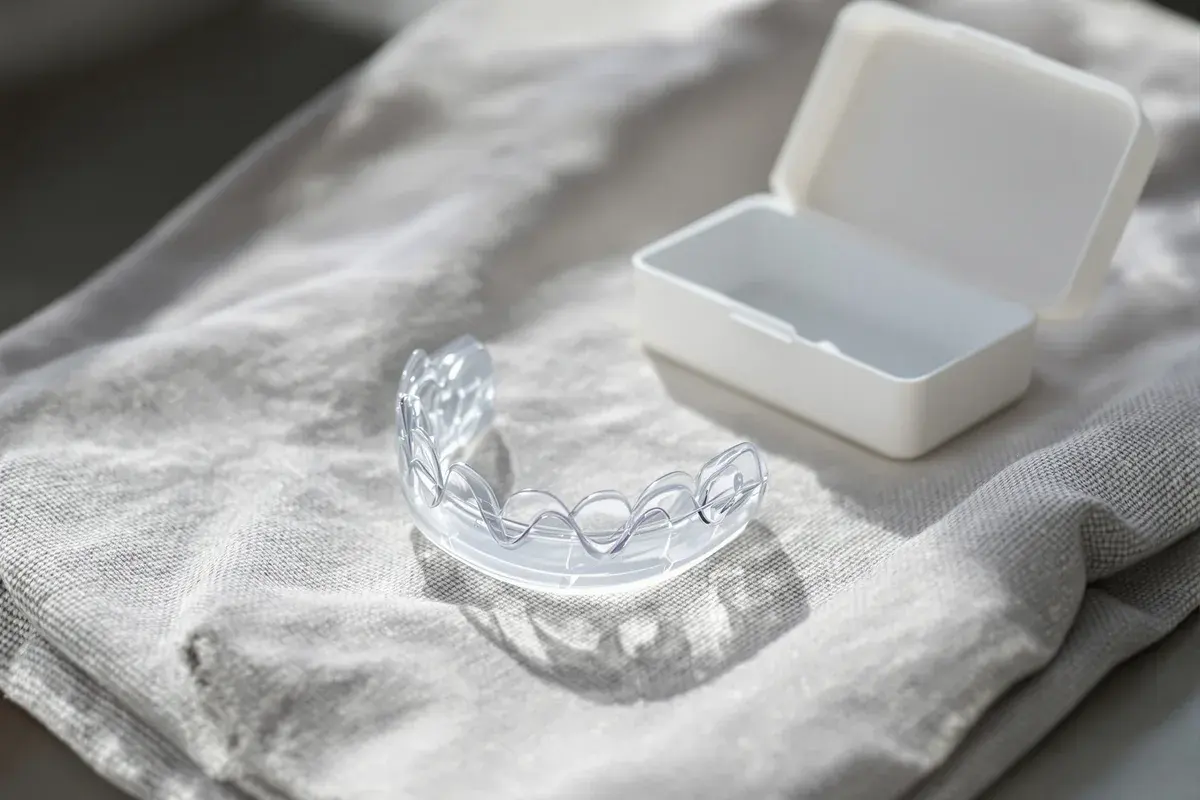
Three weeks after the flight home, a bracket comes loose from a lower front tooth and the wire starts catching your lip. Or, with clear aligners, a small tooth-coloured bump drops off a canine and the next tray no longer clicks into place. Moments like that decide whether braces in Turkey work for you, because orthodontics is a run of appointments lasting a year or two, most of them after you have gone home.
Clear aligners travel better than fixed braces, since most steps happen at home with the next tray, though attachments, refinements and the retainer scan still need chair time. Either way, settle the people before the price: who sees you at weeks six, twelve and twenty, and who takes the call when something comes off. A plan without a name against each is unfinished.
Orthodontics is counted in appointments, not trips
Teeth move because bone lets them. A light, steady force squeezes the ligament around a root on one side and stretches it on the other; bone is cleared on the squeezed side and laid down on the stretched side, and the root moves into the gap. Pushing harder does not speed this up: movement stalls and the risk of the roots shortening rises. So the force stays gentle and is renewed stage by stage, until each tooth reaches its planned position. With fixed braces that means a new wire, a bend or different elastics; with aligners, the next tray in the series. Either way somebody has to look at what moved, compare it with the plan and choose the next step, and that look is the treatment itself.
The NHS describes a fixed brace as staying on for one to two years, with an adjustment every six to eight weeks. That is roughly seven to seventeen short appointments, not counting the fitting, the removal and the retainer checks.
Aligners still need hands-on steps: attachments, the small composite bumps a tray pushes against, are bonded on at the start and replaced if they fall off (an aligner attachment that has come off). A little enamel is sometimes removed from between teeth to make room, known as interproximal reduction, and what comes off does not grow back. When teeth stray from the predicted path, a fresh scan and new trays follow; that is a refinement.
Invisalign and other clear aligners
Invisalign is one manufacturer’s brand of clear aligner, and the name is often used for the whole category. On a quote it tells you whose trays and planning software are involved. It does not tell you who examined you and approved the movements, how many refinement rounds are included, who reviews progress between trips or who makes the retainer. The British Orthodontic Society makes the same point: “a proper orthodontic assessment, diagnosis and treatment plan is essential to successful aligner treatment”.
Orthodontics is one of Turkey’s nine official dental specialties. A specialist’s çalışma belgesi (work certificate), which hangs in the treatment room, names it; ask for a photograph with the quote. A “Dr” before the name does not, on its own, show a specialty; how to check a dentist’s qualification walks through the register and the Turkish titles.
Three routes, three travel profiles
| Fixed braces | Clear aligners | Restorative shortcut | |
|---|---|---|---|
| Usual duration | 1–2 years, sometimes longer | Varies with the case; often shorter for mild crowding | One trip of 5–7 nights |
| Hands-on appointments | Every 6–8 weeks | Fewer; attachments and refinements still need chair time | Several long sittings in one stay |
| What travelling means | Repeat flights, or a local clinician taking over | Fewer return trips, but rarely none | Fits a single trip, which is the appeal |
| If it goes wrong at home | A loose bracket or poking wire needs a clinician willing to step in | A poor fit or lost tray needs review and often a rescan | Failure needs the original plan, materials and laboratory |
| What it takes from the tooth | No enamel as a rule, beyond any removed between teeth; roots can shorten, usually slightly | The same | Enamel, permanently, and sometimes more |
Among fixed braces, lingual ones, bonded behind the teeth, narrow the field at home sharply: the British Orthodontic Society says about one in ten UK orthodontic specialists offers them.
Two orthodontic quotes can be compared only when both answer the same questions: trips assumed, refinement rounds, retainers for both arches, remote monitoring and who removes the brackets; how to read a dental quote sets two quotes side by side.
A loose bracket at home
UK practices are often reluctant to take on someone else’s active orthodontic case. They lack the first clinician’s records and plan, may not stock the bracket system and would answer for a result they did not design. The NHS route is narrow too: NHS braces are usually for under-18s who have a problem with their teeth, and adults usually pay. For a child, the British Orthodontic Society notes that an NHS-contracted orthodontist can accept an NHS patient who moved from overseas mid-treatment, provided they are under 18 when first seen. An adult halfway through a course started abroad needs a private orthodontist willing to take it over, so the waiting-list argument behind treatment abroad or waiting for the NHS rarely applies.
A UK practice will usually deal with an emergency: trim a wire cutting your cheek, remove a loose band, make you comfortable. Continuing the treatment is another matter. Find that practice before the first bracket goes on, and get its agreement by email. Then ask the Turkish clinic before you sign: “If a bracket comes off once I’m home, who do I contact, and who fixes it?”
From the US, Canada or Australia a loose bracket cannot wait for a long-haul flight, so find your between-trips orthodontist at home first; what happens if it goes wrong deals with the general case.
The limits of remote monitoring
With photo-based remote monitoring, you photograph or scan your teeth with a phone every week or two, a clinician reviews the images and a tray that has stopped fitting can, in practice, be spotted between visits. A 2024 systematic review found it cuts the number of in-person visits, albeit on mostly low-quality studies; it did not show shorter treatment or fewer emergency appointments.
Its limits are physical. It cannot rebond an attachment, remove enamel between teeth, change a wire or take the scan a retainer is made from. Nor can it make you wear the trays enough: the British Orthodontic Society says they should be worn full-time, day and night, except at mealtimes. Eating and drinking with aligners has the habits that protect those hours. Ask how many in-person visits the plan assumes and what triggers an extra one.
Wires, night retainers and the spare
Without retention, teeth tend to drift back towards where they began. The pull never entirely goes, so retention is long-term, and the orthodontist sets how long and how often a retainer is worn.
That means a fixed wire glued to the inner surfaces of the front teeth, a removable retainer worn at night, or both. A 2023 Cochrane review of retention methods found the evidence too weak to call any one type clearly better, so the practical question is who can repair or replace yours. Bonded wires come unstuck; removable retainers get lost, sat on, chewed by dogs and warped on radiators, and each replacement usually needs a new scan, taken in person at a practice. Settle these before treatment starts:
- Which retainer, and for how many hours a night.
- Who makes replacements, and whether a practice at home will do so for a case it did not treat.
- Whether you leave the final appointment with a spare.
- What happens if a bonded wire comes loose and a tooth shifts before anyone notices.
Turkey teeth or orthodontics
Turkey teeth and Invisalign do two different jobs. Crowns or veneers make crowded front teeth look straight by trimming them and building over them, so the crowding stays underneath. Aligners and braces move the teeth, which is what takes the year, and remove little or no enamel, though moving teeth carries risks of its own, shortened roots among them. Whether crowding at your level calls for veneers or orthodontics depends on how far out of line the teeth are and how they bite.
The shortcut you will probably be offered
Ask about crooked teeth, mention a fortnight, and many plans come back proposing crowns or veneers on the front teeth, often labelled “smile makeover” or “Hollywood smile”, the look behind what people mean by Turkey teeth.
That route is defensible where the teeth are already heavily restored or the movement needed is small. Often, though, it is offered because it fits the trip. Two checks tell the defensible plan from the convenient one. Count the teeth: a complaint about two crooked incisors that returns as ten or twelve units has grown for reasons worth asking about, the pattern behind plans with too many crowns. Then ask what the plan would be if you could return every eight weeks for a year; a clinic with no answer has only one route to offer. A veneer plan that survives both questions can be judged with veneers in Turkey.
Starting abroad with every name in writing
A course started abroad can work when the clinician, the schedule, the practice at home and the retention plan are all named in writing before the first appointment. Whether extra aligners after a refinement count as the same treatment is a question of contract wording, the kind examined in dental guarantees.
Stop and reconsider if the plan covers the days in the chair and leaves the year after them blank. The usual signs:
- The plan arrives from photographs alone, before anyone has examined you or taken X-rays.
- Nobody can say who will plan the movements, or the clinic calls the dentist a “specialist” but no specialty appears on the work certificate.
- Gum disease or decay is waved through so the trays can start at once.
- No practice at home will commit to dealing with a loose bracket or a lost tray.
Sources
- NHS. Braces. 2026.
- British Orthodontic Society. Clear aligners, Lingual braces and Moving and transferring during treatment. 2022.
- Martin C, et al. Retention procedures for stabilising tooth position after treatment with orthodontic braces. Cochrane Database of Systematic Reviews. 2023.
- Sangalli L, et al. Effectiveness of dental monitoring system in orthodontics: a systematic review. Journal of Orthodontics. 2024.
- T.C. Sağlık Bakanlığı (Republic of Türkiye Ministry of Health). Ağız ve Diş Sağlığı Hizmeti Sunulan Özel Sağlık Kuruluşları Hakkında Yönetmelik (private dental facilities regulation), Ek-8 Çalışma Belgesi. 2024.
- Türkiye Büyük Millet Meclisi (Turkish parliament). 1219 sayılı Tababet ve Şuabatı San’atlarının Tarzı İcrasına Dair Kanun (Law No. 1219 on medical practice), Ek-2 schedule of specialties. 1928, as amended.
This page is general information, not medical advice. Outcomes vary between individuals and suitability can only be established after an in-person examination and imaging by a qualified dentist.
Related reading
Get an honest assessment first
Tell us what you're dealing with and we'll come back on WhatsApp with a straight answer — including whether travelling is worth it for your case at all. No photos needed to start.