
Gum recession around crowns: why it shows up later
A dark line at the gum edge a year on usually means the gum has moved, not that the crown failed. Why it takes months to appear and what can be done about it.
Reviewed by Yiğit Bal, dentistWritten in Turkey by a dentist. Klinikle is a clinic directory, not a clinic — no practice pays to appear here, and we do not provide treatment. Where a page compares Turkey with treatment at home, read it knowing where it was written.
Last updated:
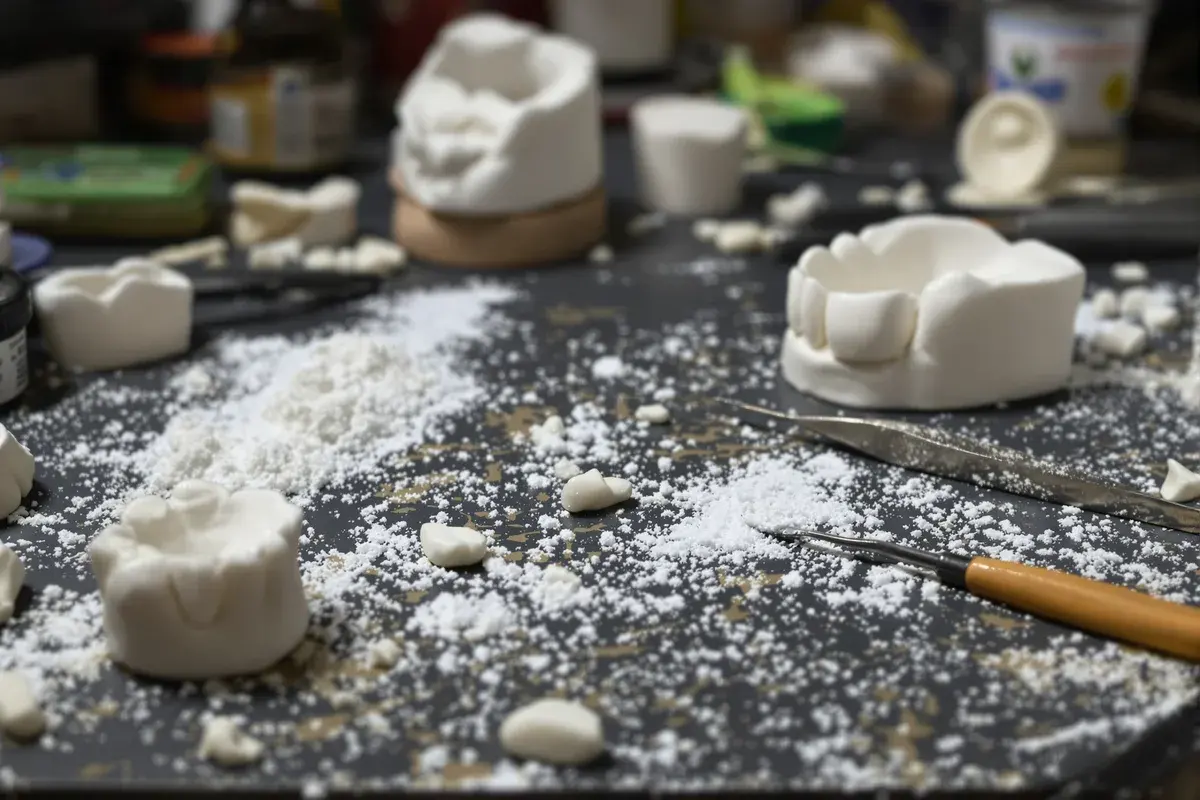
A thin dark line along the gum edge a year after your crowns went in usually means the gum has moved, not that the crown has broken. The join between crown and tooth was hidden just under the gum. The gum has receded a millimetre or two, and the join is now showing.
It is one of the commonest late complaints about crown work, and late by nature: none of it shows in the photographs taken on the day the crowns were fitted.
What the dark line is made of
That depends what the crowns are made of, and the difference is worth knowing before you assume the worst.
With a metal-based crown the dark band is the metal collar at the edge, always there and always meant to sit out of sight. Zirconia and all-ceramic crowns have no metal in them, so what shows is either the exposed root below the crown edge, darker and yellower than enamel, or the prepared core of your own tooth showing through where the ceramic is thinnest.
The root is the one that matters clinically — dentine instead of enamel, softer, quicker to decay, often sensitive to cold. A visible metal collar is a cosmetic problem. Exposed root at a crown margin is a maintenance problem.
Why it takes a year, not a week
Two clocks are running at different speeds, which is what makes the timing confusing.
The gum is traumatised during preparation, by the drill, by the cord packed under it to take the impression and by the temporary crown. It swells, then settles back over six to eight weeks. That first settling can reveal a margin by itself, and it is normal.
Underneath sits a band of soft tissue attachment above the bone, generally around two millimetres deep, though it varies between people. A margin placed inside that band is treated by the body as a permanent irritant: the tissue stays inflamed and bone slowly resorbs so the attachment can re-form below it. Bone moves over months and years, and the gum follows it down. That is the clock producing recession long after everything looked fine, and it is also why a single tooth in a row of eight can be the only one that goes.
Where it usually comes from
- A margin placed too deep. Sub-gingival margins are sometimes necessary, but the deeper they go the greater the risk of sitting inside the attachment.
- An overbuilt crown shape. A crown that bulges where it leaves the gum holds the gum away from the tooth, and plaque collects in the shelf that creates.
- A poor fit at the edge. A gap or a ledge you can feel with a probe is a permanent plaque trap.
- Gum disease never treated first. Crowning teeth in inflamed gums bakes the problem in, and bone already being lost carries on being lost.
- Thin gum tissue. Naturally thin, scalloped gums over prominent roots recede more readily whatever anyone does. That is worth establishing before the preparation, while it can still change the plan.
- Hard brushing, particularly on the upper canines and premolars.
- Smoking, which suppresses the bleeding that would otherwise have warned you.
- Age, which produces slow, even recession across the whole mouth, not at one tooth.
The first four sit with the treatment; the rest sit with your gums and habits, and a good clinician raises them before the preparation. Crowning many teeth at once multiplies the exposure, which is one of the threads in the too-many-crowns problem.
What can be done once it has happened
| Finding | Usual approach |
|---|---|
| A visible margin, gums healthy, no decay | Often nothing. Monitor, keep it clean, review the photographs each year |
| Inflammation and bleeding at that tooth | Treat the gums first. Settling swelling often improves the appearance on its own |
| Sensitive exposed root | Desensitising treatments, a softer brush, sometimes a small composite over the exposed surface |
| Decay starting at the exposed margin | Needs dealing with, and usually means the crown comes off and is remade |
| Thin tissue with continuing recession | A gum graft may be considered, generally by a periodontist and generally before remaking the crown |
| Poor crown fit or shape | Remake, with the margin repositioned. Nothing else fixes a plaque trap |
Nobody should promise you a particular result from any of these. Grafts do not always take, and a remade crown sits in whatever tissue is there now rather than the tissue you had two years ago. The sensible order is gums first, ceramic second.
Questions to ask before the crowns go on
- Where will the margins sit: above the gum, level with it, or under it, and why?
- Has my gum health been assessed and written down before any preparation?
- Is my gum tissue thin, and does that change what you recommend?
- Will the fit be checked in my mouth before anything is cemented?
- What does the plan say happens if a margin becomes visible later?
The last one belongs in writing. What a treatment plan should contain covers getting that recorded, and gum treatment covers what has to happen first if your gums are not healthy now.
Stopping it going further
Recession doesn’t reverse by itself, so the work is to halt it. Clean where the crown meets the tooth, not the crown itself, with an interdental brush of the right size, and have it looked at yearly against last year’s photographs. The daily technique is in cleaning implants and bridges properly; the yearly look sits in follow-up appointments once you are home.
This page is general information, not medical advice. Outcomes vary between individuals and suitability can only be established after an in-person examination and imaging by a qualified dentist.
Related reading
Get an honest assessment first
Tell us what you're dealing with and we'll come back on WhatsApp with a straight answer — including whether travelling is worth it for your case at all. No photos needed to start.