
No-prep veneers or conventional veneers
No-prep veneers add to the tooth; conventional ones trim it first. Which suits you depends on where your teeth sit and how dark they are, not on a preference.
Reviewed by Yiğit Bal, dentistWritten in Turkey by a dentist. Klinikle is a clinic directory, not a clinic — no practice pays to appear here, and we do not provide treatment. Where a page compares Turkey with treatment at home, read it knowing where it was written.
Last updated:
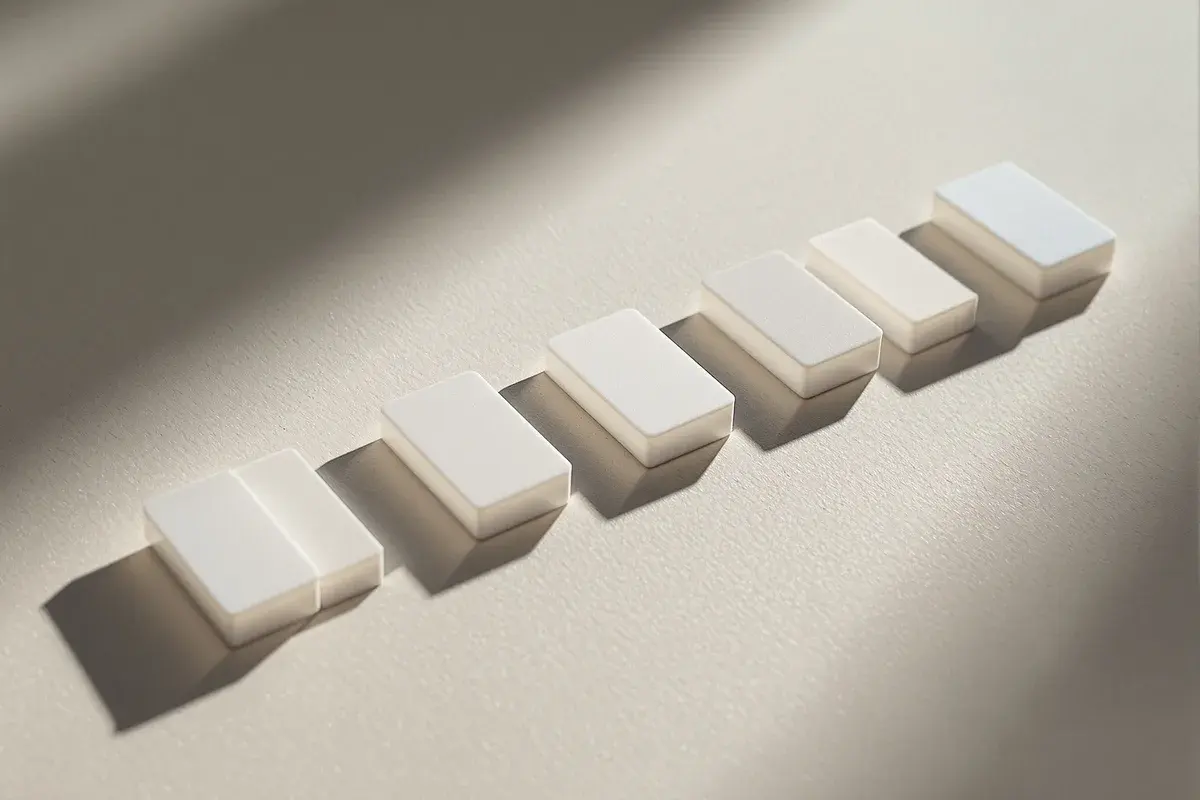
A no-prep veneer is bonded onto the front of a tooth more or less as it is, so the finished tooth ends up slightly fuller than the one you started with. A conventional veneer first has a thin layer of enamel taken off, usually a fraction of a millimetre, so the porcelain can sit within the tooth's original outline. That is the whole difference, and it explains why the choice is made by your teeth and not by you.
If a tooth needs to look bigger or come forward, adding material is the natural thing to do. If it needs to look smaller or sit further back, there is nowhere to add anything, and some reduction becomes unavoidable.
Side by side
| No-prep | Conventional | |
|---|---|---|
| Teeth it suits | Small, set back, spaced or worn at the edges | Standing forward, rotated, or needing to look smaller |
| Enamel removed | None, or a light smoothing of edges and contacts | A thin layer from the front and often the biting edge |
| Covering dark teeth | Too thin to hide much; fine for a small change in tone | Room for a more opaque layer, so more predictable on darkened teeth |
| Final thickness | Sits on top of the tooth, so the profile grows | Can stay within the tooth's natural outline |
| Edge at the gum | Harder to blend smoothly; a ledge can form | Margin is shaped, so the transition is more controlled |
| Going back | Where no enamel was removed, removal can be discussed | What is cut away does not grow back |
| Bond strength | Bonded entirely to enamel, which holds well; very thin edges can chip | Strong while the preparation stays in enamel, weaker once it reaches dentine |
What "no drilling" leaves out
No-prep veneers are sold with a simple promise: your teeth stay as they are. In the right mouth, that is close to true. In practice a dentist often still smooths a sharp edge, opens a tight contact or reshapes a corner, so "minimal-prep" is the more honest description of much of what gets done.
The bigger issue is who the promise is made to. Bond a no-prep veneer to a tooth that already stands forward and it comes further forward still. The teeth can look bulky, the upper lip can be pushed out, and the smile starts to look like a set of veneers instead of a set of teeth. At the gum line, a veneer that simply stops on the tooth surface tends to leave a small step, and a step at the gum collects plaque, inflames the gum and shows up years later as a margin that stains or a gum that has drawn back. Gum recession around crowns follows the same process around fuller restorations. None of this makes no-prep veneers a gimmick. It makes them a technique with a narrow set of good cases, and a plan that offers them to everyone should prompt one question: why do my teeth, specifically, suit this?
Where no-prep sits naturally
- Upper lateral incisors that are small or peg-shaped. They need material added to reach a normal size.
- Gaps between front teeth. The space is closed with porcelain instead of cutting.
- Teeth set slightly back from the arch, or worn short. Added thickness brings the profile back.
- A mild difference in tone, not a genuinely dark tooth.
Several of these can also be handled with composite, added by hand in a single visit and easy for a dentist back home to repair. Bonding or veneers for small chips compares that route, and it is often the right first step for a single small tooth.
Where some preparation is the honest answer
Teeth that lean forward or are rotated, teeth darkened after a root canal or by medication taken in childhood, and front teeth carrying large old fillings all need space created before a veneer can look right. The aim then is to keep that preparation within enamel. Enamel bonds far more reliably than dentine, and a preparation that stays shallow keeps the tooth closer to its original strength and makes a later replacement less destructive. Where the teeth are markedly out of line, moving them first with aligners or braces may mean far less cutting, or none; veneers or orthodontics sets out that trade. And where a quoted plan for "veneers" actually describes full-coverage preparation, the page on healthy teeth being filed down explains what is being given up.
The mock-up settles most of it
The clearest way to see which method your mouth allows is to have the planned shape tried over your teeth before anything is cut. Because a mock-up is made by adding resin, it behaves like a no-prep veneer. If it looks natural, a no-prep or very conservative plan is realistic. If it looks thick and pushed forward, reduction will be needed to reach that shape, and it is better to know that at the design stage than to find out from the finished result. The veneer mock-up lists what to check while it is in your mouth.
Questions for the clinic
- Which of my teeth would be no-prep, which minimal-prep and which conventional?
- Where preparation is planned, roughly how much, and do you expect to stay in enamel?
- Will the preparation be guided by a mock-up or wax-up?
- How will the margin at the gum be finished on no-prep teeth?
- If I want these removed in ten years, what state would the teeth underneath be in?
A clinic that answers tooth by tooth has examined your teeth. A clinic that answers "we only do no-prep" has chosen a technique first and fitted you to it afterwards.
Before you decide
Neither method is better in general. No-prep keeps more of the tooth and is easier to reverse, but only looks right on teeth that can take added bulk. Conventional veneers cost you some enamel permanently, and in return they can be shaped to sit where a natural tooth would. The question worth settling is not which one you would prefer but which one your teeth allow, and that is decided by their position, their colour and your bite, all of which can be checked before a single appointment abroad is booked.
This page is general information, not medical advice. Outcomes vary between individuals and suitability can only be established after an in-person examination and imaging by a qualified dentist.
Related reading
Get an honest assessment first
Tell us what you're dealing with and we'll come back on WhatsApp with a straight answer — including whether travelling is worth it for your case at all. No photos needed to start.