
Night guards and splints: made where you are seen
A guard protects; a splint is adjusted over several visits. Why the fitting appointments are the treatment, and how that sits with a week abroad.
Reviewed by Yiğit Bal, dentistWritten in Turkey by a dentist. Klinikle is a clinic directory, not a clinic — no practice pays to appear here, and we do not provide treatment. Where a page compares Turkey with treatment at home, read it knowing where it was written.
Last updated:
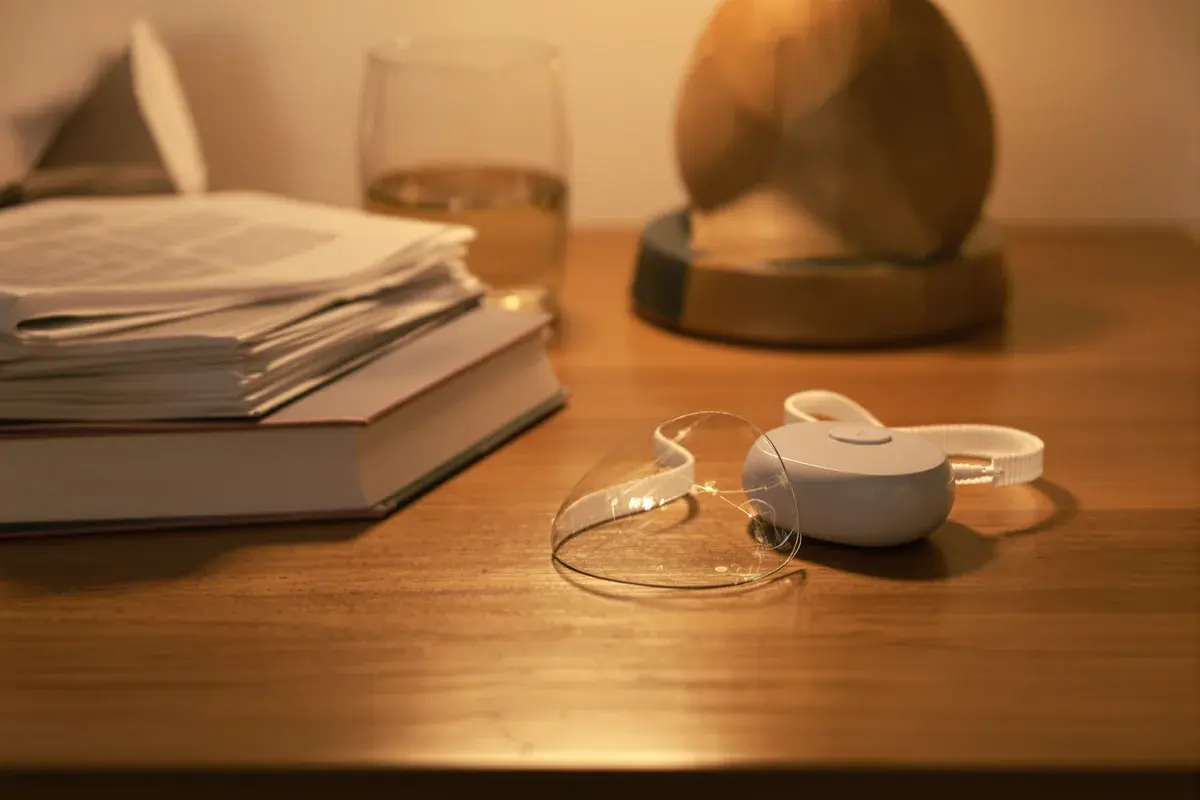
A night guard is a piece of acrylic that takes the punishment your teeth would otherwise take. A splint is a device that gets adjusted repeatedly over weeks, by a dentist watching what happens to your muscles and your joint. They look almost identical in a photograph and they are not the same treatment, which is why the second one travels badly.
If a guard is going to be part of a trip to Turkey, the thing to plan is not the appliance. It is the appointments after it.
A guard and a splint are two different objects
A protective night guard covers a whole arch, is adjusted once at fitting so that your teeth meet it evenly, and is then left alone until it wears out. It exists to be destroyed slowly instead of your teeth or your crowns. That is a self-contained job.
A stabilisation splint — the hard, full-coverage kind sometimes named after the university that popularised it — is prescribed when the jaw joint or the muscles are the problem rather than the teeth. It is built to a specific jaw position, its biting surface is flat with a defined slope on the canines, and it is deliberately altered at successive visits as the muscles let go and the jaw settles somewhere slightly different. A splint that is never adjusted after the day it was fitted has had roughly a third of its treatment.
There are narrower devices too: appliances that reposition the lower jaw for a displaced joint disc, and small appliances covering only the front teeth. Both need supervision, because leaving back teeth out of contact for months allows them to drift, and drifting teeth on top of new crown work is a problem you do not want to acquire abroad.
The appointments are the treatment, not the plastic
| Stage | What happens | What goes wrong if it is skipped |
|---|---|---|
| Examination | Wear facets charted, muscles and joint examined, decay and gum disease found, radiographs reviewed | An appliance is made for a problem you do not have |
| Sequencing | Any restorative work is completed first; gum treatment done and settled | The guard fits teeth that no longer exist by the time it arrives |
| Records | Scan or impressions of both arches, plus a bite record taken with the jaw in a defined position | It rocks, or it holds your jaw somewhere it does not want to be |
| Laboratory | Milled, printed or pressed to the prescription | Not a stage you can influence |
| Fitting | Seated, checked for even contact with articulating paper, high spots removed, the slide across the canines checked | Two or three teeth take the whole load; the guard becomes the problem |
| Review after one to two weeks | Re-marked and re-adjusted. Muscles relax and the contacts change once you have been wearing it | The commonest reason people abandon a guard in a drawer |
| Further adjustments, for a splint | Repeated until the pattern of contact is stable | The therapeutic part never happens |
| Annual check | Wear assessed, fit checked against any new dentistry | A guard worn through does nothing, and nobody notices |
Read that list against a treatment week in Turkey and the difficulty is obvious. The record stage and the fitting stage fit comfortably. The review two weeks later does not, and for a splint neither do the four appointments after it.
When an appliance is the wrong answer
This is the part that gets missed when a guard is added to a quote as an accessory.
If you snore heavily or stop breathing at night, a night guard is not the treatment and can make things worse by taking up room your tongue needs. Snoring devices work by holding the lower jaw forward and are a different appliance entirely, prescribed after a sleep study and a diagnosis. Grinding and disturbed breathing often occur in the same person, which is exactly why a guard should not be issued without anybody asking about your sleep.
If you have untreated decay or active gum disease, treat that first. A guard held over inflamed gums for eight hours a night makes an existing problem worse, and it is the reason gum treatment belongs before, not after.
If your bite genuinely feels wrong, with one side hitting first or teeth that do not come together the way they used to, that is not a grinding problem, and a guard does not correct it. It needs the bite itself examined, which is what bite problems after treatment is about.
If you are mid-orthodontics or have just finished, teeth are still moving. A guard made now will not fit in three months, and it can also work against a retainer. Sort out the retention plan first. The appointment problem in braces and aligners abroad is the same problem in a different form.
If you are having crowns or veneers, the guard is made after they are fitted, never before. That argument is set out in full in night guards after restoration.
What it is made of, and whether anyone can alter it
Ask what material yours will be, because it decides whether a dentist at home can do anything with it.
- Milled hard acrylic. Cut from a solid disc. Durable, straightforward to adjust, and it can usually be relined or added to if the fit changes. The easiest to look after from a distance.
- Three-dimensionally printed resin. Increasingly common and quick to produce. Adjustable, but some resins are harder to add material to, and a dentist here may prefer to remake one instead of repairing it. Ask which resin, and whether it can be relined.
- Thermoformed dual-laminate, soft inside and hard outside. Comfortable, well tolerated, and it has a working life, though not a long one.
- Soft vacuum-formed. Fine as a stopgap, and some people clench harder into something yielding.
Whatever it is, ask for the digital file of your finished arches before you leave. A laboratory here can work from a scan taken in Turkey, which turns “I need a new one” into an appointment, not a flight. It belongs on the same list as everything else in the records you should leave Turkey with.
Getting one out of a trip to Turkey
In order of how well it works:
- Have it made at home, after the trip, by whoever will be reviewing your new work. Best for a splint, and the sensible default if you have any jaw or muscle symptoms at all. Ask for the scan file before you fly home.
- Have it made in Turkey after the final restorations are fitted, with enough days left to be seated, adjusted with articulating paper, and worn for two nights before you leave. Say clearly that you want it adjusted, not handed over in a box. This is a real question about how long you actually need to stay.
- Have it made in Turkey and adjusted here. Workable, provided you have arranged in advance who will do it. Book that appointment before you fly, not after, along with the rest of your follow-up appointments back home.
Two things to know once you have one. If it ever goes in tight, stop and get it checked instead of forcing it. Tightness usually means teeth have moved, and forcing it can move them further. And if you wake with your jaw aching more than before, that’s a reason to be seen, not a reason to persevere.
The concrete step, if crown work is being planned, is to raise grinding at the planning stage and not at the fitting stage. It changes what gets made as well as what protects it afterwards.
This page is general information, not medical advice. Outcomes vary between individuals and suitability can only be established after an in-person examination and imaging by a qualified dentist.
Related reading
Get an honest assessment first
Tell us what you're dealing with and we'll come back on WhatsApp with a straight answer — including whether travelling is worth it for your case at all. No photos needed to start.