
Zirconia or E-max: what the material choice changes
Neither ceramic is the better one. The choice changes how much tooth is removed, how the crown is held on, and what can be done when it eventually fails.
Reviewed by Yiğit Bal, dentistWritten in Turkey by a dentist. Klinikle is a clinic directory, not a clinic — no practice pays to appear here, and we do not provide treatment. Where a page compares Turkey with treatment at home, read it knowing where it was written.
Last updated:
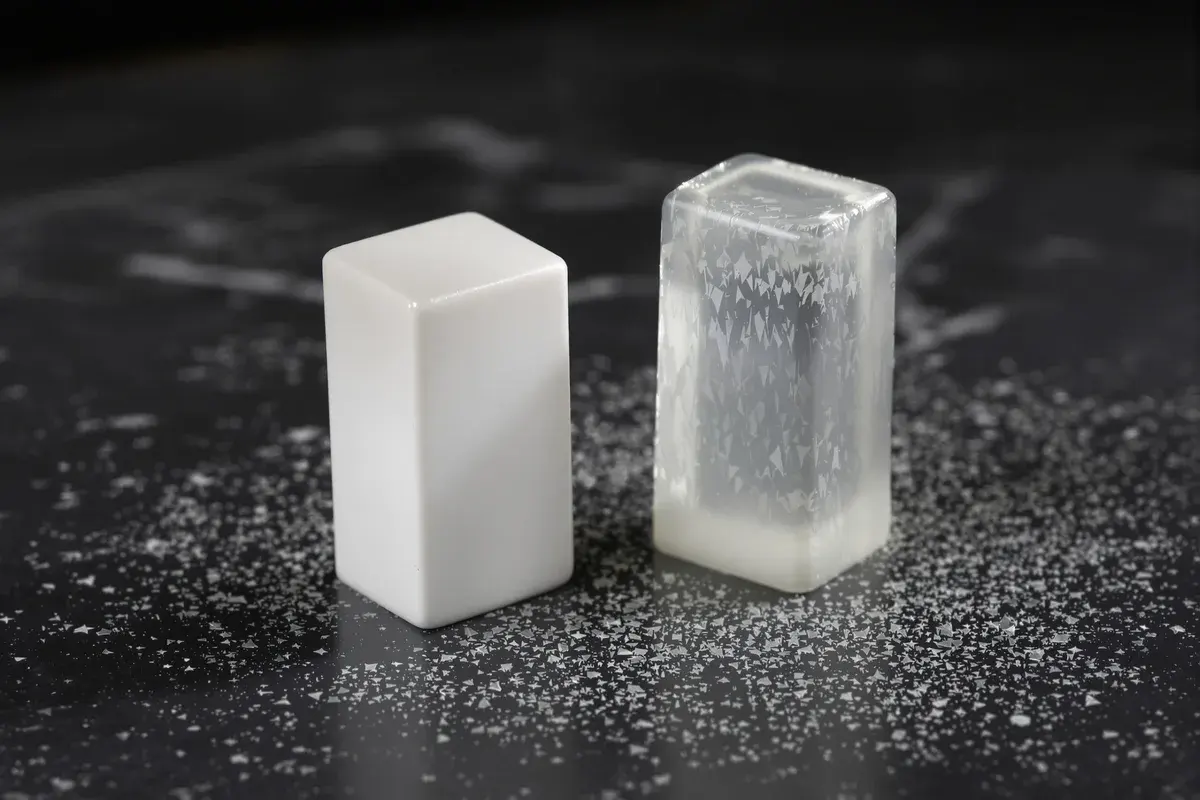
Zirconia and e.max are both ceramics, and neither of them is the better material. What the choice actually decides is how much tooth has to be removed underneath, how the restoration is fixed to what remains, how it looks in daylight, and what anybody can do about it when it eventually fails.
It is also worth knowing that only one of those two words is a material. E.max is a brand name, owned by a manufacturer, for a glass ceramic whose generic name is lithium disilicate. Zirconia is the generic name for restorations milled from zirconium dioxide, and it comes in several very different grades. Asking for the generic name and the grade instead of the brand is the single most useful question in this whole subject.
Two ceramics with different temperaments
Zirconia is exceptionally strong. It was originally opaque and rather lifeless, which is why it was used for back teeth and for the substructure of bridges, with softer porcelain layered over the front of it for appearance. Newer, more translucent grades trade some of that strength for a better look, and each manufacturer’s version behaves slightly differently.
Lithium disilicate is a glass ceramic. It is weaker than zirconia but far more translucent, it picks up some colour from the tooth underneath the way natural enamel does, and it bonds chemically to tooth structure in a way zirconia does not. That bond is the important part — it is the reason the material can be used in very thin sections.
The vocabulary around this gets loose, particularly in quotations written for patients travelling. On a treatment plan the word “zirconium” is usually doing less work than it appears to, and crowns and bridges in Turkey unpicks it.
Where each one tends to belong
| Zirconia | Lithium disilicate (e.max) | |
|---|---|---|
| Strength under load | High. The usual choice for molars, for people who grind, and for bridges spanning a gap | Good, but not the material for long spans or heavy grinding on back teeth |
| Appearance | Translucent grades are much improved, but the strongest grades can look flat next to natural enamel | The more lifelike of the two, which is why it dominates front teeth work |
| How it is attached | Usually cemented, which means the preparation itself has to hold it on | Bonded chemically to enamel, so the bond does much of the retaining |
| Tooth removal required | More, because retention has to be cut into the tooth and the material needs thickness | Less, where healthy enamel remains to bond to |
| Bridges and implant work | Yes, including full arch frameworks | Limited, mainly single units |
| Typical failure | Debonding, or chipping of the layered porcelain on layered versions | Fracture under heavy load, or debonding |
Read across the two middle rows before anything else. That is where the material choice stops being a matter of taste and starts costing you tooth.
Quotes muddy this further, because clinics use “e.max” for a veneer bonded to the front of a tooth and for a full crown alike. An “e.max veneer” and a “zirconia crown” on the same plan are two different restorations, and the gap between them in how much tooth comes off is far wider than the gap between the two ceramics; veneers or crowns shows where that line usually falls.
The half of the decision that is irreversible
Because zirconia is usually cemented rather than bonded, the preparation has to be shaped so that it grips the tooth mechanically: taper, height, a defined margin all round. That is a full crown preparation, and on a healthy tooth it means removing enamel from every surface.
Lithium disilicate can be bonded, so in the right case a much more conservative preparation works, sometimes only on the front surface. In the wrong case, where there is little enamel left to bond to, that advantage disappears and it needs a conventional preparation too.
This is why the two decisions cannot be taken separately. If a plan names e.max but describes full coverage preparations on ten sound teeth, you are getting the invasiveness of the crown route without the strength advantage that would justify it. How much tooth each approach actually costs is measured in crowns compared with veneers, and veneers in Turkey shows how to ask the question so you get a straight answer.
How each one fails, and what can be done afterwards
Everything in the mouth has a service life. The useful question is not which lasts longer in the abstract but what the failure looks like — and whether a dentist in the UK who has never seen the original work can deal with it.
Chipping and fracture
Layered zirconia chips at the porcelain covering, not the core. Small chips can sometimes be polished; larger ones generally mean remaking the unit, because layering porcelain back onto a crown in the mouth is not reliable. Monolithic zirconia, milled from one solid block, very rarely chips. Lithium disilicate does not chip in that way: it fractures under load, and when it does the unit is usually replaced. What to do in the days after a break is in a chipped or cracked crown.
Wear on the tooth it bites against
Well polished zirconia is reasonably kind to the enamel it meets. Zirconia that has been ground down to adjust the bite and then left rough is abrasive, and over years it can wear the opposing tooth noticeably. Ask whether adjustments are repolished, and if a crown is adjusted at your final appointment, notice whether anyone does it.
What is going on underneath
The far more common problem is not the ceramic at all. It is decay at the margin where crown meets tooth, or a nerve that dies under a heavily prepared tooth some years later. Neither is visible from the outside, both need radiographs to find, and both are reasons why annual reviews at home matter more than the brand of the material. Setting that up is part of aftercare when you get home.
Full arch work is a separate conversation
Screw retained zirconia bridges on implants are their own category. The material is chosen there for strength and for the fact that a whole arch can be milled as one piece, and the failure modes are different again: fractures around screw access holes, wear of the biting surfaces over years, and repairs that need the original components and often the original laboratory. All-on-4 in Turkey deals with that properly, and in those cases the paperwork matters more than the ceramic, which is the whole point of implant brand and passport.
Getting the material named on paper
A guarantee attached to work nobody can identify is difficult to use. Before anything is manufactured, get the following written into the plan:
- The generic material, tooth by tooth. Not “ceramic crowns” as a block, and not a brand name alone.
- Monolithic or layered, and if layered, where the layering sits.
- The grade or translucency of the zirconia, since the strongest and the prettiest versions are not the same product.
- Which laboratory made it, and whether the milling was done in house or sent out.
- The shade, and the shade guide used to choose it, recorded before the teeth were prepared and dried out.
- Cemented or bonded, and what material was used to fix it.
Take that list home with your images and clinical notes. What a treatment plan should contain accounts for the rest of the document, and guarantees and what they cover is blunt about why a UK dentist asked to assess a failed crown in three years’ time will want every one of these six items before they will say anything useful.
This page is general information, not medical advice. Outcomes vary between individuals and suitability can only be established after an in-person examination and imaging by a qualified dentist.
Related reading
Get an honest assessment first
Tell us what you're dealing with and we'll come back on WhatsApp with a straight answer — including whether travelling is worth it for your case at all. No photos needed to start.